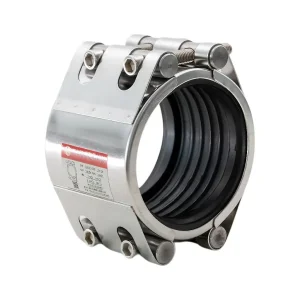
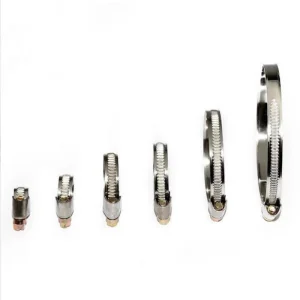
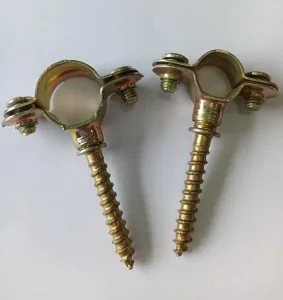
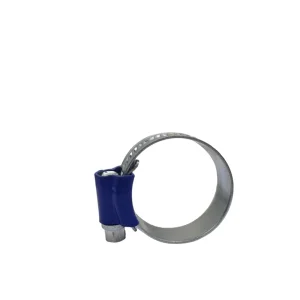
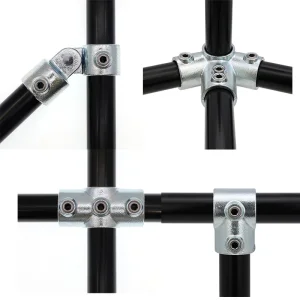
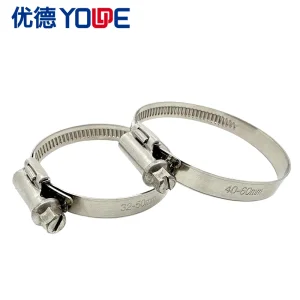
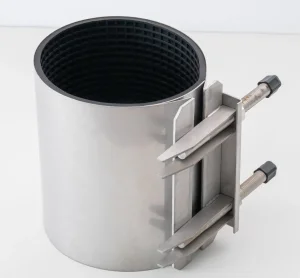
These engineered clamps are widely specified across Portuguese water authorities, marine refitting docks in Lisbon Port, and regional heavy industries for rapid maintenance and vibration-damping piping systems.
The Lisbon metropolitan area, spanning the industrial hubs of Setúbal, Vila Franca de Xira, and the active maritime corridor of the Port of Lisbon (Porto de Lisboa), presents highly demanding operational conditions for industrial piping networks. Coastal humidity, heavy maritime saline spray, and rapid municipal expansion require exceptionally durable pipeline securing components.
To mitigate structural degradation in municipal wastewater systems (managed by entities such as EPAL and SIMTEJO) and marine engineering projects, the deployment of anti-corrosive, vibration-absorbing pipe clamps is non-negotiable. Pipelines operating near the Tagus Estuary face atmospheric salinity that accelerates galvanic corrosion on low-grade fasteners. Our solution provides heavily hot-dip galvanized or premium SS304/SS316 stainless steel supports to counter these exact atmospheric conditions.
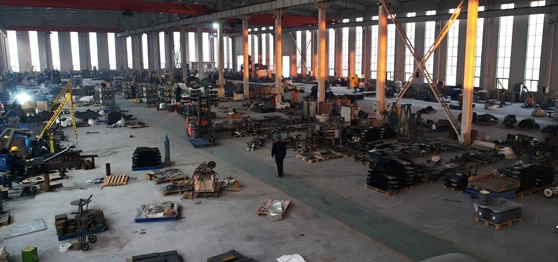
Ningbo Ampy Pipe Co., Ltd. is a leading manufacturer specializing in pipe support systems, including pipe shoes, cold pipe supports for industrial refrigeration, and highly engineered thermal insulation supports. Strategically based in Ningbo—a global port city characterized by robust mechanical manufacturing sectors and rapid shipping routes to European ports—we leverage efficient logistics to service the Iberian Peninsula with reliable OEM/ODM support systems.
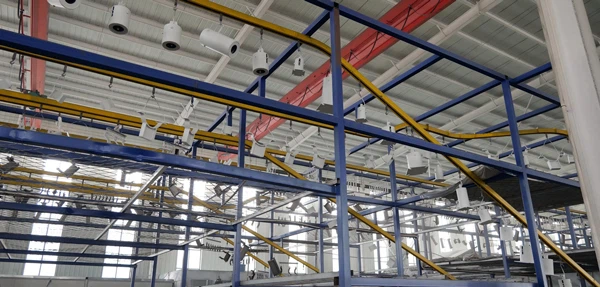
Founded in 2013, our initial focus lay in producing basic pipe support solutions for regional structural projects. Through continuous investment in raw material metallurgy, modern automation, and strict adherence to international tolerances, we expanded into high-performance insulated and cryogenic pipe support designs. By 2018, our global division commenced massive export pipelines to European markets, including major supply contracts for oil & gas, HVAC, marine refrigeration, and heavy chemical processing facilities across Portugal, Spain, and Central Europe.
Today, our specialized product catalog includes custom pipe shoes, pre-insulated pipe guides, high-density polyurethane insulation supports, and heavy-duty structural hangers. All products comply with ISO 9001 quality management guidelines, ensuring that our Lisbon distributors and engineering clients receive components designed for maximum operational longevity.
Securing pipe networks requires an understanding of mechanical loads, thermal variations, and environmental forces. Choosing the incorrect structural clamp can result in stress cracking, galvanic degradation, or cataclysmic pipeline failures. Below is a comprehensive breakdown of the core support technologies we supply to the European market:
| Clamp Class | Material Specifications | Optimal Temperature Profile | Primary Industrial Use Case in Lisbon |
|---|---|---|---|
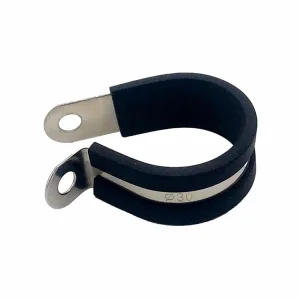
| EPDM-Lined P-Clips | SS304/SS316 Band + EPDM Rubber | -40°C to +120°C | Automotive fuel lines, hydraulic hoses, marine electrical wiring bundles. |
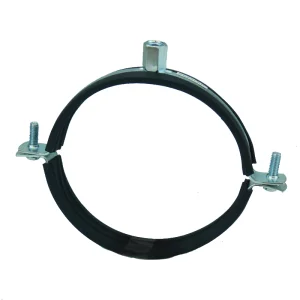
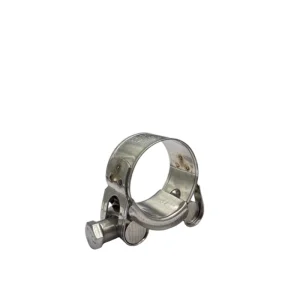
| Heavy-Duty Single Bolt Clamps | W1 (Carbon Steel Galv), W4 (SS304) | -60°C to +300°C | High-pressure slurry lines, industrial pump outlet manifolds, agricultural drainage. |
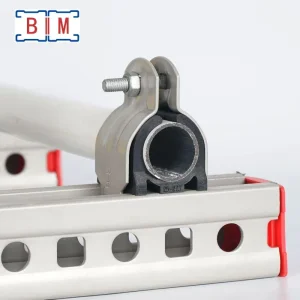
| Anti-Seismic Strut Clamps | Hot-Dip Galvanized / Powder Coated Steel | -20°C to +200°C | HVAC ventilation ducts in commercial malls, fire sprinkler lines in Lisbon Metro. |
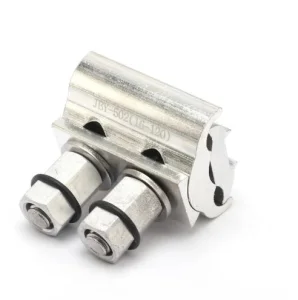
| Vacuum Aluminum Clamps | High-Quality Casting Aluminum Alloy | -50°C to +150°C | Semi-conductor cleanrooms, research laboratory vacuum lines, medical gas piping. |
| Key Clamps (Handrails) | ASTM A197 Malleable Cast Iron + Hot Galv | Ambient Temperature | Safety barriers, structural platforms at Port of Lisbon docks. |
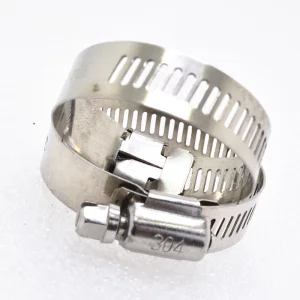
Our manufacturing department aligns production protocols with standard European norms. For instance, our worm-drive hose clips are engineered in strict compliance with DIN 3017 standards, ensuring precise torque distribution and high band tension without strip-outs. Additionally, structural support components conform to EN 1090-2 execution standards for steel structures, ensuring complete structural reliability under high static and dynamic load vectors.
Coastal structures in southern Europe are constantly subjected to severe chloride deposition. To counteract this, Ningbo Ampy Pipe Co., Ltd. utilizes advanced metallurgy and surface coating methodologies:
When copper cooling lines or stainless steel process pipes interface with carbon steel support brackets, galvanic corrosion rapidly develops in moist maritime conditions. We prevent this by integrating specialized EPDM rubber profiles or high-molecular-weight polymer isolation liners. This ensures there is no direct metal-to-metal contact, preventing electron exchange and saving thousands of Euros in maintenance costs.
In liquefied gas piping and cold-storage refrigeration systems, energy loss via structural supports (thermal bridging) leads to localized condensation and structural ice formation. Our pre-insulated polyurethane pipe shoes isolate the cold line from the supporting steel frame. This thermal barrier prevents frost heave and maintains the thermodynamic efficiency of industrial refrigeration networks in Portuguese cold-chain storage facilities.
For light-duty clips, we offer yellow zinc-plated (Cr3+ compliant) finishes that provide superior salt-spray testing values (exceeding 96 hours to white rust). For structural outdoor pipe hangers, our hot-dip galvanization process yields a minimum coating thickness of 85 microns, ensuring a maintenance-free lifespan of over 20 years in typical C4 (industrial coastal) environments like the Lisbon harbor.
As an established manufacturer exporting to Lisbon, Sines, and Porto, we streamline the procurement lifecycle for engineering procurement contractors (EPCs) and local wholesalers. We offer comprehensive engineering support, turning complex blueprints into custom-fabricated pipe brackets in record time.
No two pipelines are identical. Variations in thermal expansion, fluid density, and physical routing require tailored mechanical constraints. Our internal engineering department uses finite element analysis (FEA) to verify the load-bearing capacity of custom-welded pipe guides and heavy-duty pipe clamps before manufacturing. This allows us to supply certified support configurations for large-scale energy projects throughout Portugal.
Located less than 50 kilometers from Ningbo-Zhoushan Port, the largest cargo port globally by tonnage, we facilitate prompt sea freight shipments. For urgent municipal repair programs in Lisbon, we coordinate air freight to Humberto Delgado Airport. Under standard logistics frameworks, we manage container loading with moisture-resistant export packaging, ensuring parts arrive in Portugal free from transit damage and oxidation.
Our products have been utilized across diverse utility and commercial rehabilitation projects. Below are three representative applications detailing how our pipe clamping systems solved localized engineering challenges:
Project Requirement: The local municipal heating network in Lisbon's modern business district required structural pipe hangers capable of managing rapid thermal expansion cycles without inducing fatigue on structural concrete walls.
Implemented Solution: We provided custom-fabricated slide-type pipe shoes with integrated PTFE low-friction pads, coupled with high-temperature resistant silicone-lined band clamps. This permitted axial movement while dampening structural vibrations, resolving pipeline stress fatigue issues.
Project Requirement: High corrosion of existing galvanized iron U-bolts due to continuous exposure to chemical sanitizers and atmospheric hydrogen sulfide (H2S).
Implemented Solution: Replacement of all securing points with our marine-grade SS316 rubber-lined P-clips and heavy-duty single-bolt clamps. The chemical-resistant EPDM lining protected the thin-walled stainless steel pipelines from mechanical abrasion and galvanic corrosion.
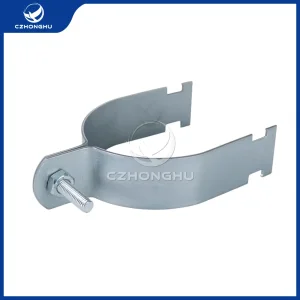
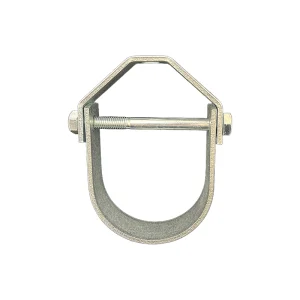
Browse our complete range of highly engineered industrial pipe clips, hangers, and fittings. Click on any product below to access mechanical drawings, torque limits, and bulk order quotation forms.
To support project managers, structural designers, and logistics coordinators in the Lisbon market, our engineering department has compiled answers to critical queries regarding pipe clamps:
 Ampy Pipe