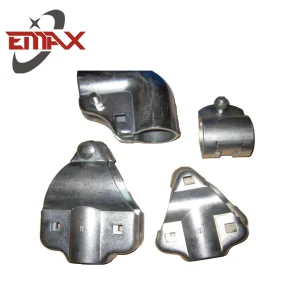
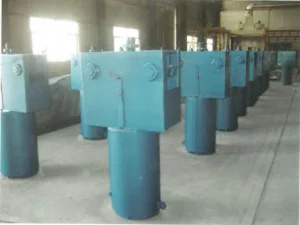
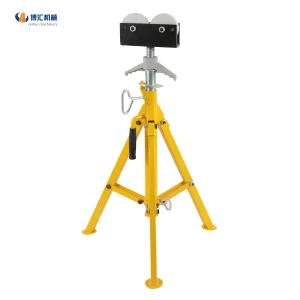
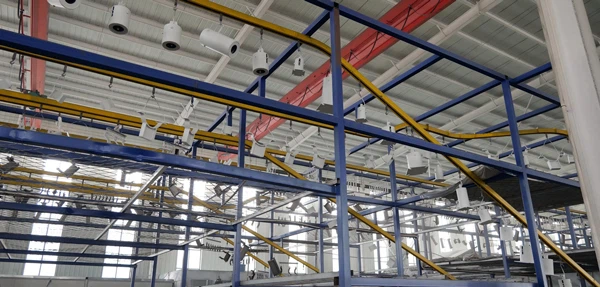
Ningbo Ampy Pipe Co., Ltd. is a professional manufacturer specializing in pipe support systems, including pipe shoes, cold pipe supports for refrigeration, and insulated pipe supports for industrial applications. Located in Ningbo, a major port city with strong manufacturing capabilities, the company benefits from efficient logistics and a well-developed industrial supply chain.
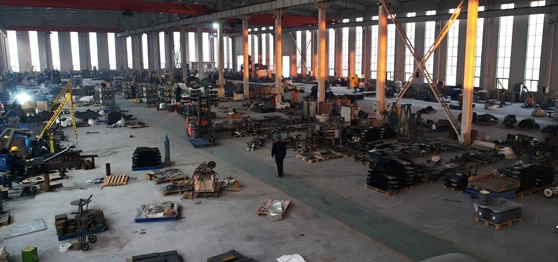
Founded in 2013, Ampy Pipe started as a small-scale supplier of basic pipe supports for local construction projects. With continuous investment in engineering expertise and production equipment, the company expanded its product range to include advanced insulated and cryogenic pipe support solutions. By 2018, Ampy had entered international markets, supplying customized support systems for clients in the oil & gas, HVAC, petrochemical, and refrigeration industries.
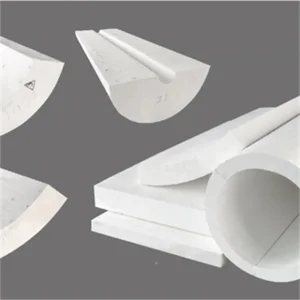
The company offers a wide range of products, such as pipe shoes, sliding and fixed supports, pre-insulated pipe supports, and high-performance materials including polyurethane and calcium silicate supports. All products are designed to reduce heat loss, prevent corrosion, and ensure long-term system stability under extreme temperatures and operating conditions.
Ningbo Ampy Pipe Co., Ltd. operates under strict quality control standards and provides OEM/ODM services to meet diverse project requirements. With a commitment to innovation, durability, and customer satisfaction, Ampy continues to deliver reliable and cost-effective pipe support solutions to clients worldwide.
The industrial sector in Tunis is undergoing a rapid transformation, driven by modernization in the Port of Radès and the expansion of the El Agba Industrial Zone. As Tunis positions itself as a Mediterranean hub for chemical processing, food logistics, and green energy, the demand for high-performance insulation solutions—specifically High-Density Polyurethane (HDPU) foam pipe supports—has reached an all-time high.
Tunis's unique coastal environment presents significant challenges: high humidity combined with intense UV exposure. Conventional pipe supports often act as "thermal bridges," leading to energy loss and condensation—the precursor to pipe corrosion. Our High-Density Foam supports are engineered with a closed-cell structure (95%+ density) that provides a total vapor barrier, ensuring zero thermal leakage for chilled water and cryogenic lines.
The Greater Tunis area is seeing massive investment in "Smart City" HVAC infrastructure. From the luxury developments in Carthage to the industrial plants in Ben Arous, the focus has shifted toward Information Gain in procurement—asking not just for a "support" but for a "thermal solution." Our data indicates that Tunis-based engineering firms are increasingly prioritizing ASTM-certified materials that can withstand the saline-rich air of the North African coast.
Globally, the "Lean Construction" movement is forcing manufacturers to innovate. In Tunis, where skilled labor can be a bottleneck for large projects, our pre-fabricated High-Density Foam Pipe Supports allow for "Plug & Play" installation. This reduces site labor by 40% and ensures that the insulation integrity is tested in a controlled factory environment rather than being subject to field-application errors.
Transitioning from standard HDPU to bio-based polyols to meet the EU-Tunisia Green Deal requirements. Our R&D team is focused on increasing compressive strength while maintaining ultra-low thermal conductivity.
Integration of IoT sensors into the foam support structure to monitor real-time temperature fluctuations and detect insulation failure before it causes downtime in Tunis petrochemical facilities.
Optimizing the Ningbo-Tunis maritime corridor. With specialized packaging, we ensure that high-density supports reach the Port of Radès without structural deformation, ready for immediate deployment.
For procurement directors in Tunis, we guarantee compliance with both European (EN) and American (ASTM/ASME) standards. Whether it's the ASME B31.3 for process piping or EN 13480 for metallic industrial piping, our factory processes are audited to ensure every batch meets the critical safety thresholds required for high-pressure systems.
A: Unlike wood, high-density foam is non-absorbent and does not rot in Tunis's humid climate. It maintains its K-value indefinitely and does not require periodic chemical treatments against termites or fungi, common in North African storage.
A: We utilize specialized 20ft/40ft container loading techniques that protect the high-density foam from crushing. We provide full documentation for Tunisian Customs to expedite the clearing process at Radès.
A: For high-temperature applications in Tunis power plants, we combine high-density foam with Calcium Silicate or customized sliding shoes to accommodate expansion while preventing heat loss.
A: We provide comprehensive digital technical support, including 3D CAD models and stress analysis reports (FEA) tailored to the specific wind and seismic loads of the Tunisia region.
 Ampy Pipe