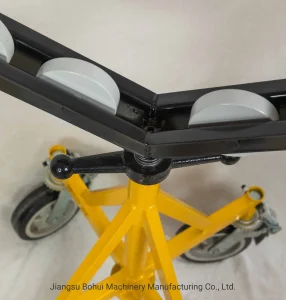
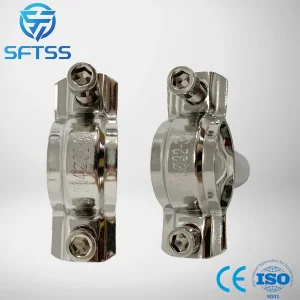
High-durability configurations designed for high load capacity, seismic absorption, and coastal corrosive resistance.

As the primary commercial gateway of Bangladesh, Chittagong (officially Chattogram) handles over 90% of the nation's import and export trade. The expansion of the Chittagong Port, the development of the Matarbari Deep Sea Port, and the establishment of major energy infrastructure—such as the Eastern Refinery Limited (ERL) unit expansion and the development of surrounding LNG import terminals—have accelerated the demand for heavy-duty industrial infrastructure. Large-scale fluid, gas, and steam transmission networks constitute the structural backbone of these developments.
Operating piping networks in Chittagong presents significant engineering challenges. Located in a humid, tropical coastal zone, the region's atmosphere is highly saline, accelerating electrochemical corrosion in steel structures. Furthermore, Chittagong falls under Seismic Zone 2 of the Bangladesh National Building Code (BNBC), necessitating pipe support designs that accommodate not only thermal expansion and static gravity loads but also dynamic seismic forces and high-velocity wind loads from cyclonic storms.
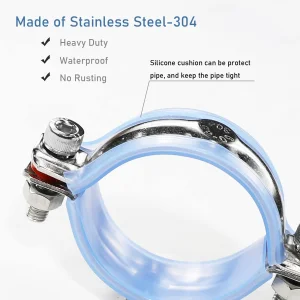
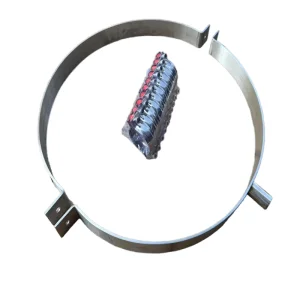
Heavy-duty pipe supports—including sliding pipe shoes, cryogenic insulated anchors, variable spring hangers, and rigid clamps—act as critical stress-relief points. They distribute massive physical loads from fluid transport columns to the primary structural steel frameworks, preventing pipe deformation, joint leakage, and catastrophic structural failure.
In high-pressure steam distribution and chemical process piping, managing thermal expansion is critical. When pipes carry hot fluids, they undergo thermal elongation. If constrained rigidly, this expansion generates massive axial stresses that can warp structural columns or rupture weld points. To prevent this, engineering teams deploy a combination of sliding supports and guided anchors.
Sliding supports, utilizing low-friction interfaces such as PTFE (Teflon) or graphite slide plates sliding against polished stainless steel surfaces, reduce friction coefficients below 0.1. This allows smooth, predictable movement along the axial path while restricting lateral deflection. Conversely, fixed supports or anchors are used to divide the piping system into independent thermal segments, directing the thermal growth into expansion loops or bellows designed to handle the movement.
Given the seismic risks in the Chittagong region, anti-seismic pipe supports and sway braces are integral. Under seismic acceleration, unbraced piping systems will sway violently, leading to impact damage against nearby structural members or failure of mechanical joints. Sway braces are engineered to resist lateral and longitudinal dynamic loads, ensuring the piping system vibrates in unison with the primary building structure, minimizing relative displacement and stress concentration.
| Support Type / Material | Yield Strength | Temperature Range | Corrosion Resistance | Optimal Chittagong Application |
|---|---|---|---|---|
| Hot-Dip Galvanized Carbon Steel (Q235B/Q355B) | 235 - 355 MPa | -20°C to 300°C | Moderate to High (Depends on Coating Thk) | Outdoor pipe racks, structural supports, general refinery utilities. |
| 304 / 316 Stainless Steel | 205 - 290 MPa | -196°C to 600°C | Excellent (High resistance to marine salinity) | Offshore platforms, coastal chemical plants, food & pharma processing. |
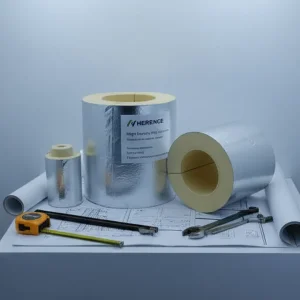
| Pre-Insulated PUF (Polyurethane Foam) Shoe | N/A (Foam core) | -196°C to 120°C | High (Moisture barrier protection) | Cryogenic LNG terminals, refrigeration units, cold gas lines. |
| Calcium Silicate Insulated Shoe | N/A (Mineral core) | Ambient to 650°C | Moderate (Requires external weather barrier) | High-pressure superheated steam lines, power generation systems. |
Global procurement teams managing large-scale industrial projects in Chittagong must evaluate total cost of ownership (TCO), production lead times, and logistical efficiency. Ningbo, China, serves as one of the world's most advanced manufacturing and shipping hubs. Sourcing heavy-duty pipe supports directly from a specialized factory in Ningbo offers distinct advantages, including access to high-grade raw materials, advanced automation, and direct ocean freight routes to Chittagong Port.
The transit corridor from the Port of Ningbo-Zhoushan to the Port of Chittagong is highly optimized, with weekly containerized shipping services and bulk cargo transport. This minimizes transit times and logistical risks, enabling project managers to align delivery schedules with critical construction phases, reducing onsite warehousing requirements.
Ningbo Ampy Pipe Co., Ltd. is a professional manufacturer specializing in pipe support systems, including pipe shoes, cold pipe supports for refrigeration, and insulated pipe supports for industrial applications. Located in Ningbo, a major port city with strong manufacturing capabilities, the company benefits from efficient logistics and a well-developed industrial supply chain.
Founded in 2013, Ampy Pipe started as a small-scale supplier of basic pipe supports for local construction projects. With continuous investment in engineering expertise and production equipment, the company expanded its product range to include advanced insulated and cryogenic pipe support solutions. By 2018, Ampy had entered international markets, supplying customized support systems for clients in the oil & gas, HVAC, petrochemical, and refrigeration industries.
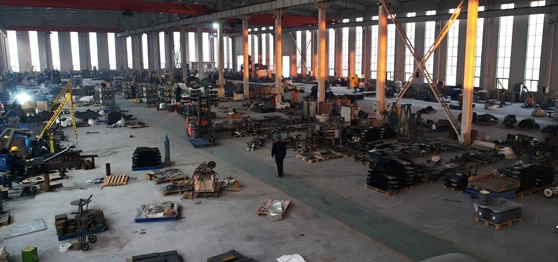
The company offers a wide range of products, such as pipe shoes, sliding and fixed supports, pre-insulated pipe supports, and high-performance materials including polyurethane and calcium silicate supports. All products are designed to reduce heat loss, prevent corrosion, and ensure long-term system stability under extreme temperatures and operating conditions.
Ningbo Ampy Pipe Co., Ltd. operates under strict quality control standards and provides OEM/ODM services to meet diverse project requirements. With a commitment to innovation, durability, and customer satisfaction, Ampy continues to deliver reliable and cost-effective pipe support solutions to clients worldwide.
The piping support manufacturing industry is evolving through advancements in materials science, digital engineering, and smart monitoring. The traditional approach of static, over-engineered supports is being replaced by dynamically optimized systems designed via Finite Element Analysis (FEA) software. This ensures material efficiency without compromising structural safety margins.
Key technological trends shaping the future of pipe support systems include:
Essential engineering questions and operational guidelines for purchasing and installation.
Select the appropriate mechanical structural configuration for your specific piping alignment and load criteria.
Whether you are designing a high-temperature steam line, a cryogenic LNG terminal, or a coastal water distribution network, our technical staff will help you engineer the optimal support layout.
 Ampy Pipe