In the complex architecture of modern industrial facilities, Pipe Alignment Guides (PAGs) serve as the silent guardians of structural integrity. These components are not merely passive supports; they are precision-engineered instruments designed to manage the violent forces of thermal expansion and contraction. As we transition into Industry 4.0, the selection of a "Top 10" factory involves more than checking a price list—it requires an analysis of Information Gain regarding material science, seismic resilience, and life-cycle cost analysis.
Ensuring that axial movement is strictly controlled to prevent lateral buckling in long-run piping systems.
Managing the delta-T in cryogenic and high-heat environments to protect expensive expansion joints.
Utilizing low-friction materials to reduce energy consumption in mechanical sliding systems.
The global piping support market is shifting from "commodity hardware" to "integrated solutions." Top factories are now providing digital twin models (BIM integration) for every guide and shoe they produce. This allows engineers to simulate pipe stress in real-time before a single bolt is tightened. In sectors like LNG (Liquefied Natural Gas) and Green Hydrogen production, the demand for high-performance alignment guides is surging, requiring factories to adhere to stringent ASTM and ASME standards.
Ningbo Ampy Pipe Co., Ltd. is a professional manufacturer specializing in pipe support systems, including pipe shoes, cold pipe supports for refrigeration, and insulated pipe supports for industrial applications. Located in Ningbo, a major port city with strong manufacturing capabilities, the company benefits from efficient logistics and a well-developed industrial supply chain.
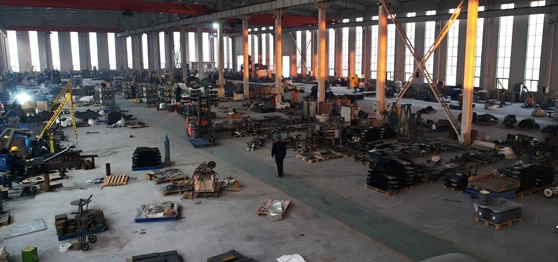
Founded in 2013, Ampy Pipe started as a small-scale supplier of basic pipe supports for local construction projects. With continuous investment in engineering expertise and production equipment, the company expanded its product range to include advanced insulated and cryogenic pipe support solutions. By 2018, Ampy had entered international markets, supplying customized support systems for clients in the oil & gas, HVAC, petrochemical, and refrigeration industries.
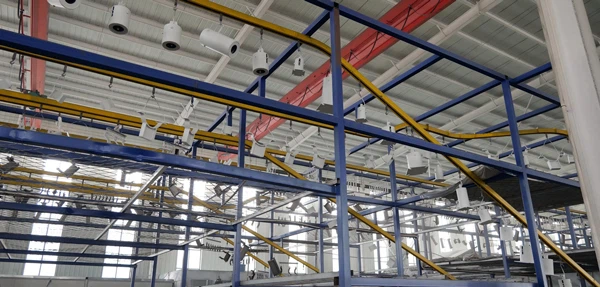
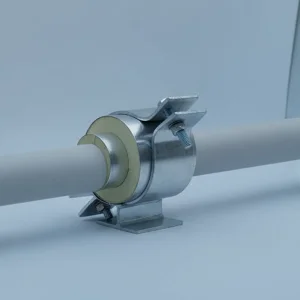
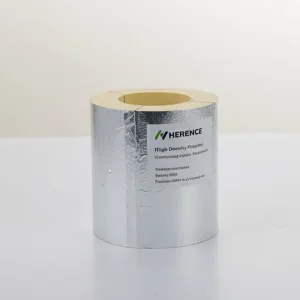
The company offers a wide range of products, such as pipe shoes, sliding and fixed supports, pre-insulated pipe supports, and high-performance materials including polyurethane and calcium silicate supports. All products are designed to reduce heat loss, prevent corrosion, and ensure long-term system stability under extreme temperatures and operating conditions.
The future of pipe alignment guides lies in Smart Monitoring. Leading factories are currently testing prototypes with embedded IoT sensors that can detect excessive friction or axial misalignment, sending alerts to a central maintenance hub before failure occurs.
Transitioning from traditional carbon steel to high-nickel alloys and composite polymers that offer superior strength-to-weight ratios and zero corrosion profiles.
As part of the global ESG (Environmental, Social, and Governance) initiative, factories in Ningbo are increasingly adopting solar-powered manufacturing and recycled steel sourcing to minimize the carbon footprint of industrial hardware.
Currently, the North American and European markets focus heavily on retrofit projects—upgrading aging steam infrastructure with modern, low-friction sliding guides. In contrast, the APAC and Middle East regions are driving the "Mega-Project" trend, requiring massive volumes of alignment guides for new district cooling systems and desalination plants. Understanding these regional nuances is what separates a standard supplier from a Global Strategic Partner.
Adherence to EN 13480 for metallic industrial piping, ensuring safety across all European member states.
Compliance with ASME B31.1 and B31.3 for power and process piping, vital for the US oil and gas sector.
Integration with national standards for large-scale infrastructure projects and high-speed rail cooling lines.
A: It ensures the factory provides more than just the product—they provide technical data, stress analysis, and localized engineering support that adds unique value to the project.
A: While clamps often restrict all movement, alignment guides are specifically designed to allow axial movement while preventing lateral and angular displacement.
A: It allows the pipe to expand freely along its axis, preventing the buildup of stress that could lead to catastrophic pipe rupture or joint failure.
A: Yes, they specialize in custom insulated and cryogenic support systems tailored to specific client specifications in complex industrial environments.
 Ampy Pipe