China Top Insulated Pipe Supports Why Are They Necessary?

Time:2026-09-18 Author:Liam
0%

Insulated pipe supports are small components with a major effect on system performance. In chilled-water lines, a weak support can compress insulation, create thermal bridges, and cause condensation around the pipe. In high-temperature systems, poor insulation continuity may increase heat loss and expose workers to hot surfaces. This explains why insulated pipe supports are necessary in commercial buildings, factories, and energy facilities.

China has become a significant manufacturing base for insulated pipe supports. Experienced suppliers offer products for chilled water, refrigeration, steam, and industrial process piping. Typical designs combine a rigid load-bearing insert, closed-cell insulation, and protective outer layers. These details help distribute pipe weight without crushing the insulation. They also support vapor-barrier continuity when installers seal the joints correctly.

Small details matter.

Field inspections often find gaps at support connections, damaged jackets, or incorrect load calculations. A support may look strong but still fail to prevent moisture penetration. Product selection should consider pipe diameter, operating temperature, insulation thickness, spacing, movement, and actual working load. Reliable manufacturers should provide technical drawings, material information, test data, and clear installation guidance. Independent verification remains sensible, especially for critical systems.

The best solution is not always the most expensive one. It is the one that matches the application and survives real operating conditions. This article examines China’s top insulated pipe supports, their construction, practical benefits, and the selection questions buyers should ask before placing an order. Mistakes are possible, even with quality products. Careful design and installation reduce them.
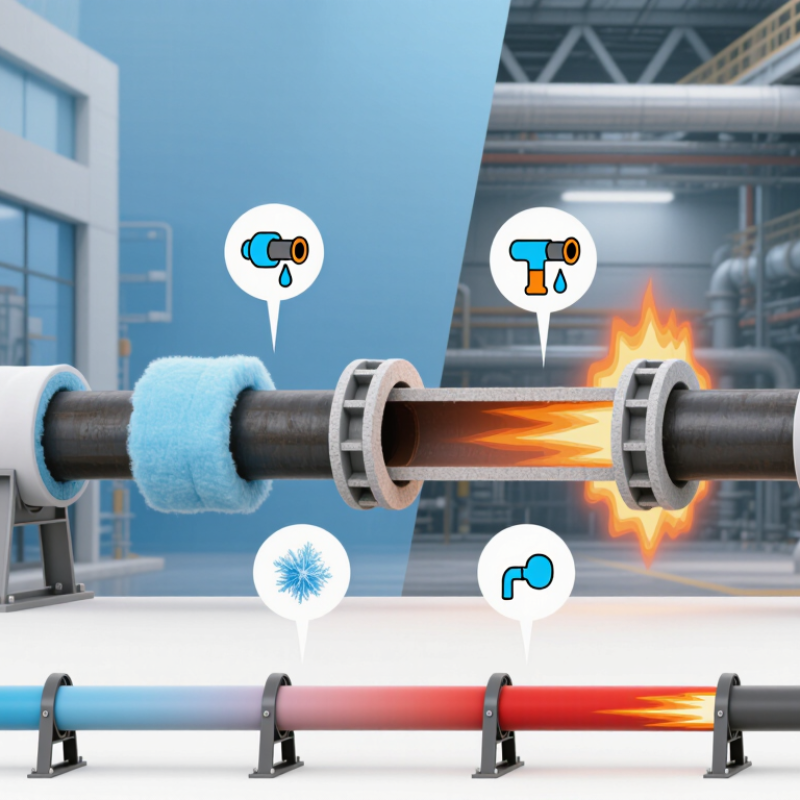
China Top Insulated Pipe Supports Why Are They Necessary?

What Are Insulated Pipe Supports?

Insulated pipe supports are load-bearing components designed to hold pipes while protecting surrounding insulation. They usually combine a rigid insert, a load-distribution section, and an outer protective layer. The insert prevents the pipe from crushing soft insulation under its weight. The outer layer limits moisture entry and surface damage.

These supports are necessary where temperature control matters. They reduce thermal bridges between the pipe and steel structure. They also help prevent condensation on chilled-water lines. On hot pipes, they reduce heat transfer to clamps, walls, and platforms.

In field inspections, engineers often find problems around support locations first. A small gap can allow water into the insulation. That moisture may remain hidden for months.

Correct selection depends on pipe weight, operating temperature, insulation thickness, and movement. Supports must also tolerate expansion, vibration, and occasional maintenance loads. Fire performance and compatibility with insulation materials require careful checking. A support can look solid and still fail under an uneven load. That detail is easy to underestimate.

Installation should keep joints aligned and avoid compressing the insulation. Sealing the outer covering helps, but it is not a cure-all. Drainage, inspection access, and accurate spacing still matter. For projects manufactured in China, reliable technical drawings, material records, dimensional checks, and load-test evidence should accompany the supports.

How Do Insulated Pipe Supports Work?

Insulated pipe supports are designed to carry pipe loads while protecting the insulation system. They sit between the pipe and its supporting steelwork. A rigid insulation section transfers weight to the support assembly. The surrounding insulation then continues around it, reducing heat loss and surface temperature changes.

The working principle is simple, but installation requires care. The support must resist vertical loads, movement, vibration, and occasional impact. For chilled or cryogenic lines, a vapor barrier must remain continuous. Any gap can allow moist air to enter and create hidden condensation. On hot lines, the support limits heat transfer into the structure. Low-conductivity inserts help reduce this thermal bridge.

During site inspections, technicians often check compression, alignment, and sealed joints. A support that looks secure may still crush soft insulation under a full pipe load. That mistake is easy to miss. Pipe movement also deserves attention. Expansion can push against the insulation and tear its outer jacket if clearances are too small. Load calculations should consider pipe weight, fluid weight, insulation weight, spacing, and operating temperature.

Good supports match the pipe diameter and insulation thickness. They also preserve drainage and access around valves, flanges, and clamps. Some designs work well on straight runs but perform poorly near elbows. Field conditions can expose weaknesses that drawings overlook. For this reason, engineers should verify material data, installation tolerances, and inspection records before closing the insulation system.

China Top Insulated Pipe Supports Why Are They Necessary? - How Do Insulated Pipe Supports Work?

Insulated pipe supports transfer pipe loads to the supporting structure while limiting heat transfer, protecting the insulation system, and maintaining the required pipe position. The values below are representative engineering ranges; final selection should be verified against the project design temperature, load, insulation thickness, movement, and applicable standards.

Support Type Typical Service Typical Operating Temperature Common Insulation or Load-Bearing Material How It Works Main Engineering Benefit
Cold Pipe Support with Vapor Barrier Chilled water, refrigeration, and process cooling lines Approximately −50°C to +20°C Closed-cell elastomeric foam, polyurethane, or cellular glass; reinforced vapor barrier The load-bearing insert supports the pipe while continuous insulation and sealed joints reduce heat gain and prevent moist air from reaching the cold surface. Reduces condensation, corrosion under insulation, and refrigeration energy loss.
Hot Pipe Insulated Support Steam, hot water, thermal oil, and high-temperature process piping Approximately +80°C to +650°C, depending on the material system Calcium silicate, mineral wool, ceramic fiber, or high-temperature composite insert A thermally resistant insert separates the hot pipe from the steel clamp or support steel, reducing conductive heat flow to the structure. Protects personnel and support steel while limiting heat loss and thermal bridging.
Cryogenic Pipe Support Liquefied gases and very low-temperature process lines Approximately −196°C to −50°C High-density polyurethane, cellular glass, aerogel systems, or engineered composite blocks The support combines structural load capacity with a low-temperature insulation envelope and a carefully sealed vapor barrier. Minimizes boil-off, frost formation, moisture ingress, and brittle failure caused by low temperatures.
Pipe Shoe with Insulated Insert Large-diameter process and utility piping Commonly −50°C to +550°C, subject to insert selection Steel shoe with calcium silicate, polyurethane, mineral wool, or composite insert The shoe distributes the pipe load over a larger area while the insert interrupts the direct metal-to-metal heat path. Improves load distribution and reduces local insulation compression.
Sliding or Low-Friction Insulated Support Piping subject to thermal expansion or contraction Typically −50°C to +550°C, depending on the sliding surface Insulated load-bearing block with stainless steel, PTFE, or polished metal sliding surface The support carries vertical loads while allowing controlled axial or lateral movement with reduced friction. Reduces restraint loads, overstress, and damage to insulation during thermal movement.
Guide Support with Insulation Protection Lines requiring controlled directional movement Project-specific; commonly −50°C to +550°C Steel guide assembly with a protected insulation insert and wear-resistant contact surfaces The guide limits unwanted lateral movement while allowing the designed axial movement of the pipe. Maintains alignment and helps prevent excessive loads on valves, flanges, and connected equipment.
Anchor or Fixed Insulated Support Systems requiring a defined point for thermal expansion control Project-specific; based on pipe and support materials Structural steel anchor with a high-strength thermal break and protected insulation system The anchor resists axial and lateral forces while the thermal break limits heat flow between the pipe and the supporting structure. Creates a stable reference point for pipe stress management and protects connected equipment.

Key Design Data for Insulated Pipe Supports

Design Parameter Typical Range or Requirement Why It Matters
Pipe Diameter Selected to match the outside diameter of the pipe plus the specified insulation thickness Correct sizing prevents gaps, compression, movement, and damage to the vapor barrier.
Insulation Thickness Common project values are approximately 25–150 mm; cryogenic systems may require more Thickness affects surface temperature, energy loss, condensation control, and support geometry.
Thermal Conductivity Often approximately 0.020–0.080 W/m·K at reference temperature, depending on material and temperature Lower thermal conductivity generally provides better resistance to heat transfer, but compressive strength and temperature limits must also be checked.
Compressive Strength Common engineered support inserts range from approximately 0.2 to above 10 MPa, depending on density and material The insert must carry the sustained pipe load without excessive crushing or permanent deformation.
Load Capacity Calculated from pipe weight, insulation, contents, fittings, test loads, wind, seismic effects, and friction forces A support is structural equipment and must be checked for both vertical and horizontal design loads.
Thermal Movement Often several millimetres to hundreds of millimetres over long pipe runs, depending on length and temperature change Sliding supports, guides, loops, and anchors must be arranged to accommodate calculated expansion and contraction.
Vapor Barrier Integrity Continuous and sealed on cold-service systems A damaged vapor barrier can allow moisture ingress, causing condensation, ice formation, and corrosion under insulation.
Support Spacing Project-specific; determined by pipe size, material, wall thickness, contents, allowable deflection, and support load Correct spacing limits pipe sagging, excessive stress, vibration, and insulation compression.
Engineering note: Temperature ranges, load capacities, thermal conductivity, and support spacing are representative values rather than universal ratings. The final design should be confirmed using the selected material datasheets, piping stress analysis, structural calculations, fire requirements, and applicable project standards.

Why Are Insulated Pipe Supports Necessary?

Why Are Insulated Pipe Supports Necessary?

Insulated pipe supports prevent heat transfer where pipes rest on structural members. Without them, the insulation becomes compressed, leaving a cold bridge around the contact point. Moisture can then collect beneath the jacket, especially on chilled-water and refrigeration lines. Rust follows quietly. In my field experience, these small gaps often appear after maintenance, not during installation. They are easy to overlook.

ASHRAE Handbook guidance stresses continuous insulation and vapor-retarder protection around cold piping. ASHRAE Standard 90.1 also specifies pipe insulation requirements according to temperature, diameter, and service conditions. These details show that support design is part of energy control, not merely a mechanical accessory. The International Energy Agency reports that buildings consume about 30% of global energy, so repeated thermal losses deserve attention. A properly engineered support distributes the pipe load, protects insulation thickness, and limits surface temperature changes. It also reduces condensation risks near ceilings, valves, and equipment connections.

Details matter.

Support spacing must match pipe weight, operating temperature, and insulation density. Poor alignment can crush the insert or create stress at welded joints. The U.S. Department of Energy identifies insulation maintenance as a practical energy-efficiency measure, yet field inspections remain inconsistent. That is an uncomfortable gap. Engineers should check vapor seals, load capacity, and metal-to-metal contact during commissioning and later inspections. The solution is not always perfect, but it is far safer than assuming hidden insulation remains intact.

What Makes China’s Insulated Pipe Supports Competitive?

China’s insulated pipe supports compete through practical engineering, controlled production, and flexible customization. Their main value is simple: they limit heat transfer while carrying heavy pipe loads. In a chilled-water room, a poorly designed support can create condensation at the clamp. Moisture then reaches insulation joints and nearby steelwork. Proper insulation inserts, vapor barriers, and load-bearing shells reduce this risk.

Many Chinese manufacturers combine CNC cutting, molded insulation, and metal fabrication in one supply chain. This can shorten production cycles and lower tooling costs. Buyers may request different pipe diameters, insulation thicknesses, load ratings, or surface treatments. Factory teams can often adjust drawings quickly. That matters on projects where mechanical layouts change late. Competitive pricing also comes from local material access and high-volume manufacturing, not only cheaper labor.

Quality still needs verification. A low quotation may hide weak compressive strength, uneven dimensions, or incomplete vapor sealing. Experienced buyers should review technical data, sample sections, inspection records, and installation guidance. Ask for compression testing.

The market is not flawless. Some suppliers communicate well before payment but respond slowly after delivery. Others offer attractive samples that do not represent every batch. Independent inspection, clear tolerances, and written performance requirements make the purchase more reliable. The best support is not merely inexpensive. It fits the pipe, survives site conditions, and remains stable through years of thermal movement.

China Top Insulated Pipe Supports: Why Are They Necessary?

Typical thermal conductivity of insulation materials used in pipe support systems

Lower thermal conductivity generally means better resistance to heat transfer and a lower risk of thermal bridging at pipe supports. The values shown are representative midpoints of commonly published ranges at approximately 20°C; actual performance depends on density, temperature, moisture, aging, and installation quality.

Insulated pipe supports are necessary because they transfer mechanical loads while maintaining insulation continuity, reducing heat loss or gain, condensation risk, and damage to the pipe insulation. China’s competitiveness is commonly supported by broad material availability, scalable fabrication capacity, and the ability to customize dimensions, load ratings, and insulation systems to project requirements.

How to Select Insulated Pipe Supports for Industrial Systems

Selecting insulated pipe supports for industrial systems requires more than matching pipe diameter. The U.S. Department of Energy’s Steam Tip Sheet No. 2 reports that proper insulation can reduce steam-line energy losses by up to 90%. That result depends on continuity around supports, not insulation thickness alone.

Start with operating temperature, pipe size, insulation thickness, and empty and full pipe loads. For chilled lines, specify a support with a continuous vapor barrier. A small break can admit moisture and reduce thermal performance. For hot lines, check compressive strength, fire behavior, and long-term deformation. ISO 12241 provides calculation principles for industrial thermal insulation. ASTM C680 also supports heat-loss and surface-temperature assessments.

Movement matters too. Thermal expansion can create sliding forces, especially near anchors and guides. Calculate axial movement before choosing a rigid or sliding support. The IEA’s Energy Technology Perspectives 2024 identifies industry as a major global energy consumer, so small design losses can become costly across long pipe networks. In practice, I inspect the support interface, jacket seals, and clamp alignment during installation. A perfect drawing can still fail onsite. Fit matters. Water always finds weak details.

Do not select only by catalog load rating. Request verified compression data, temperature limits, dimensional tolerances, and test documentation. I would also compare actual site conditions with the original design, because maintenance access and uneven steelwork often change the decision. That step is easy to miss.

FAQS

What are insulated pipe supports?

They are load-bearing components placed between pipes and supporting steelwork. A rigid insert carries the pipe weight. An outer layer protects insulation from moisture and surface damage.

Why are insulated pipe supports important?

They reduce thermal bridges between pipes and steel structures. They also help prevent condensation on chilled-water lines. Small gaps can hide moisture for months.

How do these supports protect pipe insulation?

The rigid section transfers weight without crushing soft insulation. The surrounding insulation stays continuous around the support. Uneven loading remains a common concern.

What information is needed for correct support selection?

Selection depends on pipe weight, fluid weight, temperature, movement, and insulation thickness. Support spacing also affects the total load. A simple-looking application may still need detailed calculations.

How should supports handle pipe movement?

Supports must tolerate expansion, vibration, and occasional impact. Insufficient clearance can tear the outer jacket near elbows. Movement is easy to underestimate.

How do supports help chilled and hot pipes?

Chilled-pipe supports help maintain a continuous vapor barrier. Hot-pipe supports reduce heat transfer into clamps, walls, and platforms. Low-conductivity inserts can reduce thermal transfer further.

What should installers check during installation?

Installers should check alignment, compression, sealed joints, and clearances. They should avoid compressing the insulation. Drainage and inspection access still matter.

Do sealed joints solve every insulation problem?

No. Sealing limits moisture entry, but it cannot correct poor drainage or incorrect spacing. Technicians should inspect vulnerable areas near valves, flanges, and elbows. A sealed defect is still a defect.

What documents should accompany supports made for industrial projects?

Technical drawings, material records, dimensional checks, and load-test evidence should be available. Installation tolerances should also be recorded. Paperwork alone cannot replace field inspection.

Conclusion

Insulated pipe supports are engineered components that hold and stabilize piping while reducing heat transfer between the pipe and its supporting structure. They typically combine a strong load-bearing exterior with an insulation layer that helps control temperature, limit condensation, and protect against thermal loss. Understanding why insulated pipe supports are necessary is essential for systems transporting hot, cold, or temperature-sensitive fluids, especially in industrial, HVAC, refrigeration, and energy applications.

Their benefits include improved energy efficiency, reduced risk of corrosion under insulation, greater personnel safety, and longer service life for both pipes and support structures. China’s insulated pipe supports are often competitive because manufacturers can provide varied materials, designs, sizes, and production capacities at cost-effective prices while meeting project-specific requirements. When selecting a suitable product, engineers should evaluate operating temperature, pipe diameter, load capacity, insulation thickness, environmental conditions, fire performance, installation method, and compliance with applicable technical standards. Proper selection ensures reliable support, effective insulation, and stable long-term system performance.

Liam

Liam

Liam is a dedicated marketing professional with a profound expertise in the industry, where he excels at highlighting the unique advantages of our core products. With a keen understanding of market trends and consumer needs, Liam frequently updates our company’s professional blog, providing......