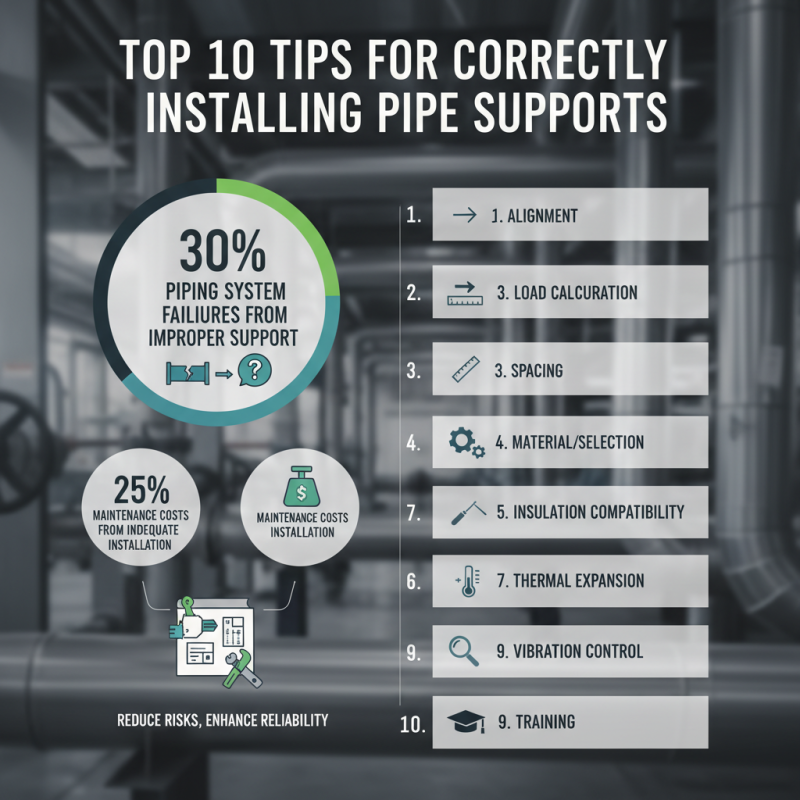
Proper installation of pipe supports is essential in various industries, including construction and manufacturing. According to a recent study by the American Society of Mechanical Engineers (ASME), 30% of piping system failures arise from improper support. Understanding how to install pipe supports correctly can significantly reduce these risks and enhance system reliability.
Industry standards emphasize the importance of accurate alignment and support spacing. In a report by the Pipe Support Manufacturers Association (PSMA), 25% of maintenance costs are linked to inadequate pipe support installation. This highlights the need for precision and attention to detail. Without careful planning, even a seemingly minor oversight can lead to costly repairs or safety hazards.
Reflecting on these statistics, it becomes clear that experience and knowledge in this area are vital. Engineers and maintenance teams must be well-versed in best practices. Investing time in learning how to install pipe supports correctly can yield long-term benefits. It's not just about following a checklist; it’s about understanding the principles behind effective support solutions.
Understanding the Importance of Pipe Supports in Installation
Pipe supports are critical in ensuring the longevity and efficiency of piping systems. Proper installation of these supports helps to mitigate stress, vibration, and movement within the piping. Data indicates that over 50% of piping failures occur due to inadequate support. This highlights the necessity for accurate installation practices. A well-supported pipe reduces the risk of leaks, preventing costly downtimes.
Understanding the material and design specifications of supports is essential. Incorrectly sized supports can lead to support failures, which can cause system inefficiencies. Reports show that maintaining uniform spacing between supports enhances load distribution. For example, the spacing for horizontal pipes typically ranges from 8 to 10 feet, depending on pipe diameter.
Despite this knowledge, many installers overlook the significance of proper alignment. Misalignment can increase stress and fatigue on pipes, leading to premature failures. Additionally, a lack of attention to detail can result in unexpected costs. Regular inspections and adherence to installation standards can tackle these issues. The recognition of these practices is crucial in managing any piping system effectively.
Selecting the Right Type of Pipe Support for Your System
When selecting pipe supports, understanding the specific requirements of your system is crucial. Different applications, such as oil and gas pipelines or chemical plants, demand unique support types. According to industry studies, improper selection of pipe supports can increase installation costs by up to 30%. This underlines the importance of choosing the right type.
Consider the type of material in your pipeline. Steel, PVC, and copper pipes all have different weight and thermal expansion properties. A report by the American Society of Mechanical Engineers (ASME) indicates that using insufficient supports can lead to pipe sagging and increased stress on joints. Pipe supports should accommodate these variations. Proper spacing between supports is vital as well; a common guideline recommends spacing them every 10 to 12 feet for horizontal pipes.
Avoiding mistakes in pipe support installation often involves revisiting design plans. Too frequently, engineers overlook load-bearing capacities. Up to 20% of pipe failures can be attributed to incorrectly installed supports. Monitoring installations and conducting field reviews can help in addressing potential issues early. Recognizing that not all environments are the same will empower engineers to adapt their strategies effectively.
Top 10 Tips for Correctly Installing Pipe Supports
This chart represents the importance level of various factors to consider when installing pipe supports. Each factor plays a crucial role in ensuring the longevity and effectiveness of the pipe support system.
Preparation Steps Before Installing Pipe Supports
Before installing pipe supports, proper preparation is crucial. Professionals emphasize assessing the pipe's weight and thermal expansion. Studies show that improperly installed supports can lead to premature failures, causing significant downtime and repair costs. Research indicates that over 30% of piping failures are linked to support issues.
Accurate measurements are vital. Measure the distance between pipes and the supporting structure. Use a level to ensure proper alignment. Additionally, consider the environmental factors. Data from industry reports reveal that environmental stressors can affect support performance over time. Ignoring these can result in increased maintenance costs.
Documenting infrastructure design is equally important. Engineers should provide clear guidelines before installation. This helps avoid miscommunication between teams. Even with all steps followed, unexpected issues can arise. Reflection on past projects highlights this uncertainty. Learning from these experiences promotes a culture of safety and efficacy in installation practices.
Best Practices for Properly Positioning Pipe Supports
Properly positioning pipe supports is critical for system integrity and longevity. According to the American Society of Mechanical Engineers (ASME), improper support placement can lead to significant stress on piping systems. This can result in increased wear and potential failure of components. Maintaining the right spacing is essential. Typically, supports should be placed every 10 feet for horizontal piping and within 5 feet for vertical installations.
The alignment of supports with load-bearing points is crucial. Misalignment can cause undue stress, leading to joint failures. Surveys indicate that 40% of piping systems experience misalignment issues, which could have been avoided with proper planning. Regular inspections are vital, as well. They help identify any shifting or settling of supports that may occur over time. Using adjustable supports can provide flexibility, allowing for thermal expansion or contraction.
It’s important to engage a qualified engineer when designing support layouts. Their expertise ensures compliance with industry standards. Yet, even experienced professionals can overlook minor details, leading to costly repairs. Keeping open communication with installation teams can help address challenges. Visual aids such as diagrams may enhance understanding, but they aren’t foolproof. The human element remains critical in avoiding mistakes during installation.
Regular Maintenance and Inspection of Installed Pipe Supports
Regular maintenance and inspection of installed pipe supports are essential for ensuring optimal performance. Over time, these supports may show signs of wear or damage. Corrosion is a common issue. It can severely impact the structural integrity of the supports. Regular checks can help detect these problems early, preventing costly repairs later.
When inspecting, pay attention to alignment and stability. Misalignment can lead to stress in pipes. Furthermore, regularly lubricating moving parts can minimize friction, enhancing lifespan. Consider creating a routine schedule for these inspections. Write down each observation. This documentation will be valuable for future assessments.
However, not all inspections yield perfect results. Sometimes, the inspection process itself may overlook minor issues due to human error. Training personnel to identify specific signs of wear is crucial. Even experienced inspectors can miss details when under time constraints. Continuous education and updated guidelines can help improve accuracy. Regular reviews of maintenance procedures can also reveal areas needing improvement.
Top 10 Tips for Correctly Installing Pipe Supports
| Tip Number |
Tip Description |
Importance |
Frequency of Maintenance |
| 1 |
Ensure proper alignment of pipes before installation. |
Prevents stress and damage to piping. |
Quarterly |
| 2 |
Use the correct type and size of pipe supports. |
Ensures load distribution and stability. |
Bi-annually |
| 3 |
Install supports at proper intervals as per engineering standards. |
Maintains structural integrity. |
Annually |
| 4 |
Ensure that supports are securely bolted and locked. |
Minimizes risk of movement and loosening. |
Monthly |
| 5 |
Check for signs of wear or corrosion on supports. |
Early detection prevents failures. |
Monthly |
| 6 |
Keep supports free of debris and obstructions. |
Ensures proper drainage and airflow. |
Weekly |
| 7 |
Inspect temperature effects on piping and supports. |
Prevents thermal expansion issues. |
Seasonally |
| 8 |
Document all inspections and maintenance activities. |
Facilitates tracking and accountability. |
Whenever actions are taken |
| 9 |
Train employees on proper installation and inspection techniques. |
Improves compliance and efficiency. |
Annually |
| 10 |
Consult with specialists for complex installations. |
Ensures expert handling of unique requirements. |
As needed |
Conclusion
When it comes to how to install pipe supports correctly, understanding their importance is paramount. Pipe supports play a crucial role in maintaining the integrity and functionality of a piping system by providing necessary stability and support. Selecting the right type of pipe support tailored to your specific system is essential for optimal performance.
Before diving into installation, thorough preparation steps are necessary, including assessing load requirements and ensuring proper alignment. Best practices for positioning pipe supports involve considering factors such as spacing and environmental conditions to prevent undue stress on the pipes. Lastly, regular maintenance and inspection of installed pipe supports are vital to ensure long-term reliability and safety. By following these guidelines, one can effectively master the art of installing pipe supports correctly.

 Ampy Pipe