Why Are Different Types of Pipe Supports Essential in Industry?

Time:2026-05-03 Author:Ethan
0%

In the industrial landscape, the effective management of piping systems is crucial. Properly supporting pipes ensures safety and efficiency. Understanding what types of pipe supports are used in industry is vital for optimal performance. Different environments and pipeline materials require specific support types to manage load and stress.

Pipe supports play roles beyond merely holding up pipes. They also reduce vibrations and thermal expansion issues. Each pipe type may need a unique support system to function effectively. For instance, vertical and horizontal supports differ significantly in purpose and design.

Yet, the selection process isn’t always straightforward. Factors like fluid type, temperature, and manufacturing standards impact decisions. Companies may miscalculate the required support, leading to potential hazards. Investing time in understanding these supports can greatly enhance operational safety and efficiency.
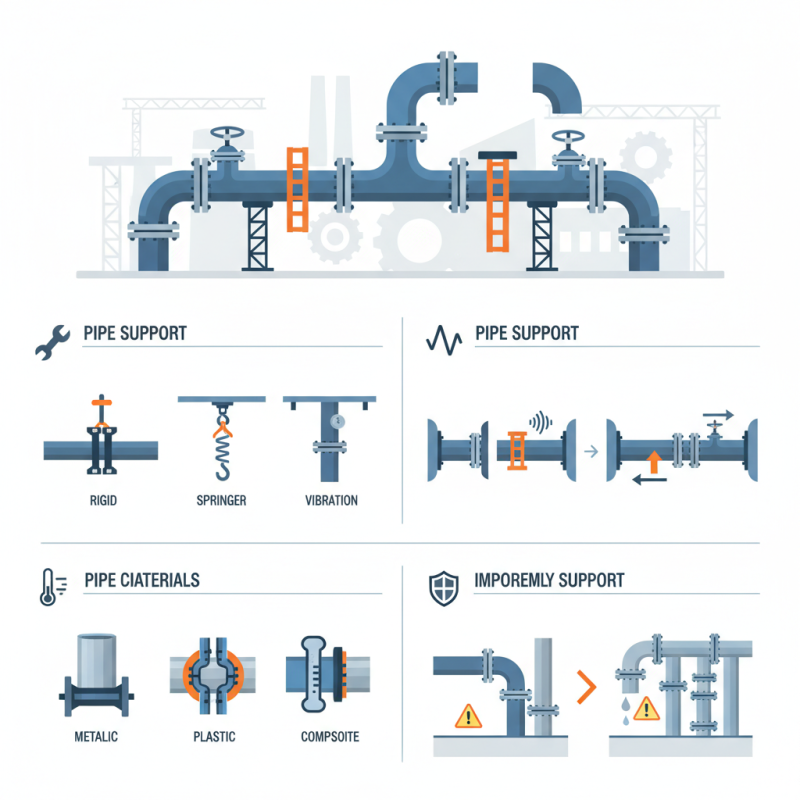
Why Are Different Types of Pipe Supports Essential in Industry?

Types of Pipe Supports and Their Functional Importance in Industry

In industrial settings, various types of pipe supports play a vital role in ensuring pipeline integrity and operational efficiency. Different materials and configurations are employed to accommodate specific conditions, such as thermal expansion and vibration. According to a report by the International Journal of Mechanical Engineering, improper support design contributes to nearly 30% of pipeline failures, highlighting the need for careful consideration of support types.

One common type is the adjustable pipe support. These supports allow for easy height adjustments, accommodating thermal expansion. Another important type is the rigid support, which provides stability in high-stress areas. When selecting pipe supports, it's essential to consider factors like load capacity, corrosion resistance, and environmental conditions.

Tip: Regular inspections of pipe supports can prevent costly repairs and downtime. Maintain a checklist for routine assessments to identify any signs of wear or misalignment. Remember, a small oversight today can lead to significant issues in the future. Keeping supports well-maintained is crucial for operational efficiency.

Moreover, choosing the right support can impact the overall system performance. Engineers must assess the specific requirements of each project. This involves understanding the unique forces acting on the pipeline. Sometimes, unexpected challenges arise, prompting the need for adjustments. This ongoing evaluation process is key to optimizing pipe support usage and enhancing pipeline reliability.

Why Are Different Types of Pipe Supports Essential in Industry?

Type of Pipe Support Function Materials Commonly Used Applicable Industries
Anchors Prevent movement and provide stability Steel, Stainless Steel Oil & Gas, Chemical
Hangers Support vertical loads and allow for thermal expansion Metal, Composite Materials Construction, HVAC
Braces Provide lateral support preventing sway Aluminum, Steel Water Treatment, Power Generation
Spacer Supports Maintain distance between pipes and surfaces Plastic, Rubber Pharmaceuticals, Food Processing
Spring Supports Absorb shocks and vibrations Metal Springs Aerospace, Automotive

Key Factors Influencing the Selection of Pipe Supports

The selection of pipe supports in industry hinges on several key factors. Material type is critical. Different materials react uniquely to temperature fluctuations and corrosion. For instance, carbon steel supports might be cost-effective but may rust over time. Conversely, stainless steel offers improved durability but at a higher price. This decision often reflects the project's budget and lifespan.

Load specifications also play a vital role. Each pipe system has a specific weight requirement. Inadequate support can lead to sagging or failure. Engineers must evaluate dynamic loads, including vibrations from equipment. Often, a support that works well on paper fails in real-world applications.

Environmental conditions add complexity. Areas with extreme temperatures or chemicals require specialized supports. The local climate can also influence performance. For example, coastal environments may lead to faster corrosion. Alongside these factors, proper installation practices are essential. Even the best pipe supports can falter if not installed correctly. Balancing cost, performance, and environmental factors is crucial for longevity.

The Role of Pipe Supports in Preventing Structural Damage

Pipe supports play a crucial role in maintaining the integrity of industrial systems. They can prevent excessive stress on pipes caused by thermal expansion, vibration, and weight. Properly designed supports distribute the load evenly. They allow for movement without compromising the system. This reduces the risk of leaks and catastrophic failures.

Structural damage can occur when pipes are not adequately supported. A heavy pipe may sag, leading to misalignment. This can create pressure points that weaken the structure over time. Regular inspections are essential to identify any signs of wear or fatigue. Each support type, whether brackets, hangers, or clamps, has its specific application and limitations. Understanding these nuances is key.

Despite advancements, many facilities still overlook the importance of pipe supports. Some may use generic solutions that do not fit unique circumstances. This can lead to serious issues down the line. Investing in tailored solutions enhances reliability, ultimately preventing costly repairs. A thoughtful approach to pipe support can safeguard both assets and safety.

Importance of Different Types of Pipe Supports in Industry

How Pipe Supports Enhance System Efficiency and Safety

In industrial settings, pipe supports play a crucial role in enhancing efficiency and safety. A report by the American Society of Mechanical Engineers indicates that improper support can lead to significant structural failures. These failures often result in operational downtimes and unexpected repair costs, which accounts for up to 30% of maintenance budgets in large facilities.

Pipe supports ensure that pipelines remain stable and properly aligned. This alignment prevents unnecessary stress on the materials. For example, flexible supports allow for thermal expansion, reducing the risk of pipe ruptures. A study by Engineering News-Record highlights that consistent maintenance of pipe supports can improve system integrity and extend lifespan by up to 40%.

However, many facilities underestimate the importance of regular assessments of these supports. Ignoring this can lead to serious safety hazards and increased operational risks. It's essential for industry professionals to proactively evaluate and upgrade their support systems to maintain optimal performance. A lack of commitment in this area may reflect poorly on overall operational strategy.

Industry Standards and Guidelines for Pipe Support Installation

The installation of pipe supports follows strict industry standards to ensure safety and efficiency. Various guidelines outline specific requirements for materials, spacing, and load capacities. Adhering to these regulations enhances the longevity of piping systems. For instance, supports must be placed at intervals that consider the weight and temperature of the pipes.

In practice, many projects struggle with compliance. Workers may overlook critical specifications due to time constraints. This lapse can lead to significant issues, such as pipe sagging or excessive vibration. Regular training on standards can mitigate these risks. It is essential to prioritize precise installation as it directly impacts overall system performance.

Moreover, coordination among teams is vital. Engineers, contractors, and safety managers must communicate effectively. Misunderstandings can result in improper support placements. Assessing past installation scenarios can reveal common pitfalls. Organizations should reflect on these lessons to improve future practices.

FAQS

: What role do pipe supports play in industrial settings?

: Pipe supports enhance efficiency and safety by keeping pipelines stable and properly aligned.

How can improper support affect a facility?

Improper support can lead to structural failures, resulting in operational downtimes and high repair costs.

What percentage of maintenance budgets do these failures account for?

Failures can account for up to 30% of maintenance budgets in large facilities.

How do flexible supports help prevent issues?

Flexible supports allow for thermal expansion, reducing the risk of pipe ruptures.

What can consistent maintenance of pipe supports achieve?

It can improve system integrity and extend lifespan by up to 40%.

Why are regular assessments of pipe supports important?

Regular assessments prevent serious safety hazards and maintain optimal performance.

What issues arise from non-compliance with installation standards?

Non-compliance can lead to problems like pipe sagging or excessive vibration.

How can time constraints affect installation quality?

Workers may overlook critical specifications, compromising the installation's effectiveness.

Why is team coordination crucial in installation projects?

Effective communication prevents misunderstandings and ensures proper support placements.

What can organizations learn from past installation scenarios?

Assessing past mistakes can reveal common pitfalls and inform future practices.

Conclusion

The article "Why Are Different Types of Pipe Supports Essential in Industry?" explores the crucial role of pipe supports in various industrial applications. It outlines the primary types of pipe supports used in industry, such as brackets, hangers, and restraints, each serving distinct functional purposes that contribute to the overall stability and performance of piping systems. Factors influencing the selection of these supports are also discussed, emphasizing aspects like load capacity, material compatibility, and environmental conditions.

Moreover, the role of pipe supports in preventing structural damage is highlighted, as they help manage the thermal expansion and contraction of pipes, reducing stress on the infrastructure. By ensuring proper alignment and support, pipe supports not only enhance system efficiency and safety but also comply with industry standards and guidelines for installation. Ultimately, understanding what types of pipe supports are used in industry is vital for maintaining operational integrity and extending the lifespan of industrial systems.

Ethan

Ethan

Ethan is a seasoned marketing professional with a deep expertise in our company's innovative product line. With a passion for sharing knowledge and insights, he takes the lead in regularly updating our corporate blog, where he explores industry trends, product features, and effective marketing......