Why Are Fixed and Sliding Supports Different?

Time:2026-11-01 Author:Henry
0%

A bridge deck expands on a hot afternoon, then contracts as temperatures fall. If its supports prevent all movement, those changes can create unwanted forces. This is where the question “what is the difference between fixed and sliding supports” becomes practical, not merely academic.

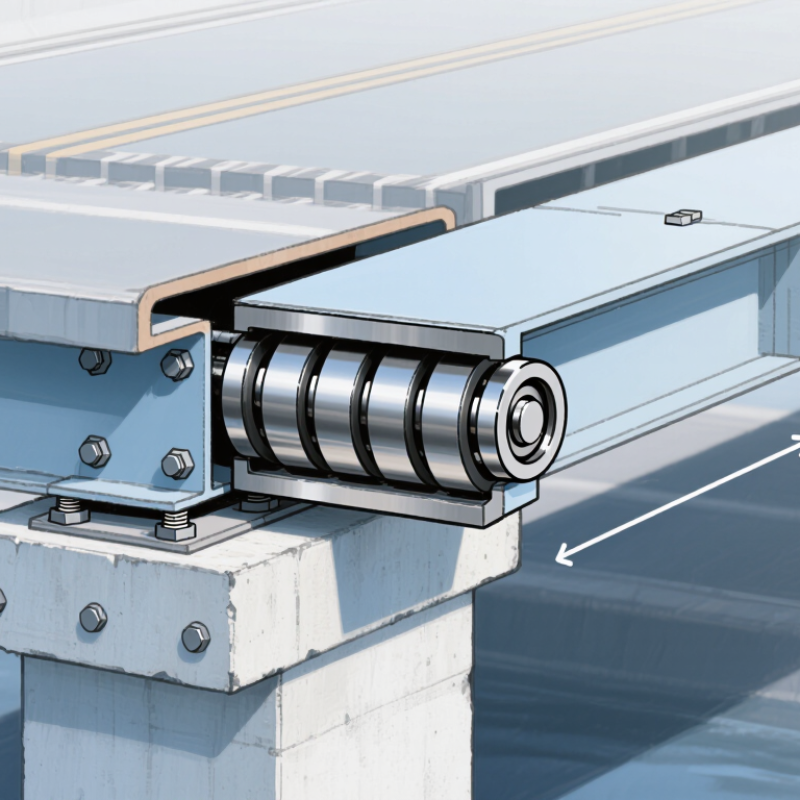
A fixed support restrains movement in selected directions, helping transfer forces into the structure below. A sliding support allows controlled movement along a defined path while still carrying specified loads. Picture a bearing beneath a bridge girder: one end may guide the deck, while another permits thermal movement. The exact behavior depends on the design, bearing type, and installation. Small details matter.

Wai-Fah Chen is a structural engineering scholar and author of technical references on structural mechanics. Rather than inventing a direct quotation, here is a clearly labeled paraphrase of the design principle: “Restrain the movement the structure cannot tolerate; allow the movement it must accommodate.” That distinction guides engineers when they assess load paths, temperature changes, settlement, and restraint. It also explains why the labels alone are not enough. A support called “sliding” may still resist movement in other directions. A fixed support is not simply “stronger.” It performs a different job.

Real designs can be less tidy than textbook diagrams. Friction, wear, debris, and installation tolerances can affect movement. Engineers therefore check the actual support arrangement and project requirements before drawing conclusions.
Why Are Fixed and Sliding Supports Different?

What Supports Do in Structural Systems

Supports turn a structural system’s load path into controlled reactions. They carry vertical loads into columns, abutments, or foundations, while limiting movement where the design requires it. A fixed support restrains movement in specified directions. A sliding support allows planned movement, often along a bearing surface. The distinction matters when a bridge deck warms in sunlight, cools overnight, or shifts under traffic. If movement is blocked, forces can build in the deck and connected members. If restraint is missing, the structure may move more than intended. Small details matter.

The American Society of Civil Engineers’ 2021 Report Card for America’s Infrastructure reported that 42% of U.S. bridges were at least 50 years old. It also rated 7.5% of bridges structurally deficient. These figures describe bridge age and condition, not support failures. Still, they underline why inspections and sound detailing matter across a structure’s life.

At a bearing, engineers check the support type, movement allowance, contact surfaces, and signs of wear. A blocked sliding surface may be hard to spot from below. It is easy to underestimate. Even a small misalignment can change how loads travel, so drawings, field conditions, and maintenance records should be considered together.

How Fixed Supports Restrict Movement and Rotation

A fixed support restrains a structure from moving in any direction and from rotating. In a two-dimensional beam model, that usually means horizontal and vertical movement are blocked. Rotation is blocked too. The support can therefore provide horizontal and vertical reaction forces, plus a resisting moment. Picture a beam clamped to a thick wall: pushing down may bend the beam, but the connection resists turning at its end.

That resisting moment is the key difference from a simple sliding support. A sliding support allows movement along one surface and permits rotation, while still resisting movement normal to that surface. A fixed connection instead transfers bending effects into its anchorage. Bolts, welds, plates, and the surrounding concrete or steel must all be designed to carry those forces. A sketch may show a perfectly rigid joint. Not perfectly rigid. Real connections flex slightly, and that detail can affect deflection and stress.

Engineers often model a support as fixed to simplify calculations, but the assumption needs checking against the actual connection. A base plate with flexible anchors may rotate more than the model suggests. Even small movement can matter in a long, slender beam. I have seen the drawing look convincing while the connection details told a less certain story. The model is useful, but it is not the structure itself.

How Sliding Supports Allow Controlled Translation

Why Are Fixed and Sliding Supports Different?
How Sliding Supports Allow Controlled Translation

A fixed support restrains movement at a chosen point, while a sliding support permits movement along a defined path. This difference matters when a beam, pipe, or bridge component changes length with temperature. Even a modest change can create significant force if both ends are locked. The sliding detail gives that movement somewhere to go.

A sliding support typically carries vertical load while allowing controlled translation across a bearing surface. Guides may limit sideways movement, keeping the member aligned without blocking its intended travel. For example, a pipe may move a few millimetres as it warms, while its support continues to carry its weight. Small movement. Real consequences.

The sliding surface is not friction-free. Friction, dirt, wear, and misalignment can affect how easily movement occurs, so the support must suit the load and expected travel. I think this detail is easy to underestimate: allowing motion on a drawing does not guarantee motion in service. Engineers should check movement limits, restraints, and maintenance conditions for the specific installation. A support that slides too freely or binds unexpectedly can both cause problems.

Why Are Fixed and Sliding Supports Different? — How Sliding Supports Allow Controlled Translation
Comparison Dimension Fixed Support Sliding Support
Primary function Restrains movement at the support and helps keep the connected member in a set position. Supports the structure while allowing movement along a defined direction or surface.
Idealized 2D behavior Restrains horizontal and vertical translation and rotation. Restrains movement perpendicular to the sliding surface while permitting translation along it; idealized roller models also permit rotation.
Typical reactions Can develop horizontal force, vertical force, and a moment reaction. In an ideal frictionless model, develops a reaction normal to the sliding surface, with no reaction along the sliding direction.
Thermal movement Restraining expansion or contraction can create additional forces in the connected structure. Allows designed movement, helping accommodate expansion and contraction caused by temperature changes.
Movement control Limits movement through a rigid connection or anchorage. Guides or limits movement to the intended path; guides and stops may restrict movement in other directions.
Friction in practice Movement at the connection is generally not intended in the structural model. Real sliding interfaces have friction, so they may transfer some force along the sliding direction. The amount depends on the bearing design, materials, and conditions.
Common applications Anchored column bases, rigid frame connections, and supports designed to restrain movement. Bridge bearings, building movement joints, and other connections designed to accommodate specified displacement.
Key design checks Check anchorage, connection strength, force and moment transfer, and the effects of restrained movement. Check movement capacity, bearing pressure, friction forces, alignment, wear, and any guide or stop forces.
Important qualification Actual restraint depends on connection details and the stiffness of the supporting structure. Actual movement and restraint depend on the bearing type and its detailing; not every sliding support permits rotation or movement in every direction.

How Their Reactions and Structural Effects Differ

A fixed support and a sliding support differ most in the forces they allow a structure to develop. In bridge-bearing terminology, a fixed bearing restrains horizontal translation and transfers horizontal reaction into the pier or abutment. It may still allow rotation, so “fixed” does not always mean fully clamped. A sliding bearing carries vertical load while permitting movement along a designed path. Its horizontal reaction is not automatically zero; friction, guides, and stops can still transfer force.

The movement can be substantial. The AISC Steel Construction Manual gives structural steel a thermal expansion coefficient of about 6.5 × 10⁻⁶ per degree Fahrenheit. A 100-foot steel member exposed to a 100°F temperature change would lengthen about 0.78 inch, before accounting for restraint or other effects. FHWA’s Bridge Inspector’s Reference Manual likewise describes bearings as components that transfer loads while accommodating intended movement and rotation. This is why engineers check bearing travel, connection forces, and the supporting concrete together.

A practical distinction appears on site: a fixed bearing may push horizontal load into a pier, while a sliding bearing relieves much of that demand by moving. But a seized or poorly aligned slider can behave differently than intended. That possibility deserves attention; calculations alone do not reveal every installation issue. The thermal estimate above is also simplified: it excludes temperature gradients, construction tolerances, and friction, which can change actual reactions.

Why Are Fixed and Sliding Supports Different?

Idealized restraints and their effects in a 2D structural model

How to read the chart: 1 means the movement is restrained; 0 means it is free. A fixed support restrains horizontal and vertical translation and rotation, so it can develop horizontal and vertical reactions and a moment. A horizontal sliding support restrains vertical movement but allows horizontal movement and rotation; ideally, it develops only a vertical reaction. Actual reaction magnitudes depend on the structure, its loads, and its support arrangement.

When Each Support Type Is Used

Fixed and sliding supports serve different movement needs. A fixed support anchors a structure at a chosen point, resisting horizontal translation while usually allowing rotation. It helps transfer wind, braking, or other horizontal forces into the substructure. Sliding supports restrain movement in selected directions but allow controlled travel along a bearing surface. They are useful where long beams, bridge decks, or roof members expand and contract with temperature.

For scale, the AISC Steel Construction Manual gives structural steel’s thermal expansion coefficient as about 6.5 × 10⁻⁶ per °F. A 100-foot steel member experiencing a 72°F temperature change could move roughly 0.56 inches. That movement needs somewhere to go. A common layout fixes one point and places sliding supports elsewhere, limiting unwanted drift while reducing thermal stress. Actual bearing travel also depends on temperature gradients, friction, installation tolerances, and structural geometry. Those details are easy to underestimate.

Tips: Check the movement direction before choosing a sliding support. Add guides where sideways motion must be restrained. For bridges, compare the bearing arrangement with the project’s AASHTO LRFD design requirements. A neat drawing is not enough; field alignment can still change how a bearing behaves.

FAQS

What does a structural support do?

It transfers loads into columns, abutments, or foundations. It also controls movement where the design requires it.

How does a fixed support behave?

In an ideal two-dimensional beam model, it restrains horizontal and vertical movement and rotation. It can transfer forces and a resisting moment. Real connections flex slightly.

What movement does a sliding support allow?

It allows planned movement along a bearing surface while resisting movement across that surface. It usually permits rotation too. Small details matter.

Why might a bridge need sliding supports?

A bridge deck expands in warmth and contracts as temperatures fall. Sliding bearings give that movement somewhere to go, helping limit built-up forces.

How much might a long steel member move with temperature?

A 100-foot member facing a 72°F temperature change could move about 0.56 inches. The actual movement depends on conditions and geometry.

Why are fixed and sliding supports often used together?

One anchored point can help resist horizontal forces, while sliding supports allow controlled movement elsewhere. The arrangement can reduce thermal stress and unwanted drift.

What should engineers inspect at a bearing?

They check the support type, allowed movement, contact surfaces, alignment, and wear. A blocked sliding surface may be difficult to see from below.

Why check the connection instead of trusting the model?

A drawing may assume a perfectly rigid joint, but flexible anchors or small misalignments can change how loads travel. The model helps, but it is not the structure.

What can cause a sliding support to behave differently than expected?

Friction, installation tolerances, temperature gradients, and geometry all matter. A neat drawing is not enough; field alignment can still change bearing movement.

Conclusion

Supports connect structural elements and determine how forces and movement are transferred through a structure. Fixed supports restrain translation in all directions and prevent rotation, so they can develop horizontal and vertical reactions as well as a resisting moment. This strong restraint can improve stability, but it may also create additional internal forces when the structure deforms or temperatures change.

Sliding supports provide a different kind of restraint: they support the structure while allowing controlled translation, typically in one direction, and may still limit movement in other directions. They generally do not resist rotation in the same way as fixed supports. So, what is the difference between fixed and sliding supports? Fixed supports hold an element firmly in place, while sliding supports accommodate movement to reduce unwanted stress. Fixed supports suit locations requiring firm restraint; sliding supports are useful where expansion, contraction, or other movement must be accommodated.

Henry

Henry

Henry is a dedicated marketing professional with a profound expertise in the company's offerings. With years of experience in the industry, he possesses an impressive understanding of the market dynamics and consumer behaviors that drive success. Henry is committed to sharing his insights through......