Designing an effective pipe support system requires careful consideration of multiple factors. Understanding how to design a pipe support system is crucial for both safety and efficiency. This topic involves structural integrity, load distribution, and material selection. Engineers must assess different environmental conditions and stress impacts on the piping system.
However, imperfections often arise during the design process. Miscalculations can lead to system failures, resulting in costly repairs and downtime. This highlights the importance of using reliable data and proven methods in the design phase. Engineers should share experiences and learn from past projects to avoid repeating mistakes.
Global applications demand versatile designs that accommodate various industrial needs. Each region may have unique requirements. A one-size-fits-all approach rarely works. Therefore, a thoughtful evaluation is essential for creating an adaptable support system that meets diverse standards. Attention to detail and continuous improvement are vital in achieving a robust pipe support system.
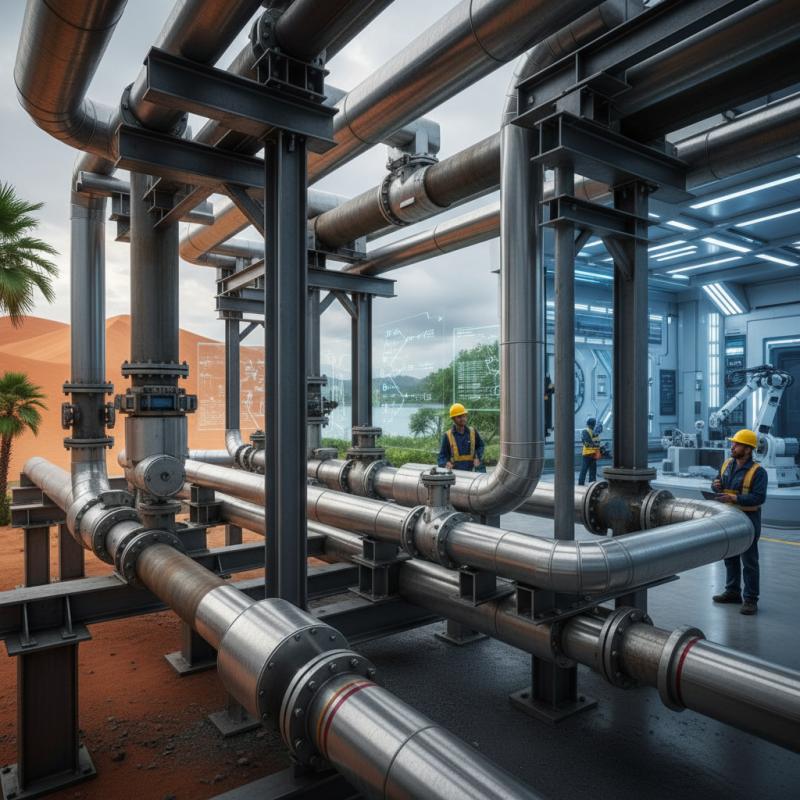
Pipe support systems are essential in various industries, serving as the backbone for efficient operation. Their design impacts the longevity of pipelines and equipment, which is crucial, especially in global applications. Research indicates that improper support can lead to a staggering 30% increase in maintenance costs. This underscores the importance of robust engineering in creating effective systems.
Understanding load distribution is vital. A well-designed support system accounts for thermal expansion, weight, and vibrations. Inadequate support may result in serious consequences, including leaks or even system failures. According to a 2022 survey by the International Institute of Pipe Support Design, over 40% of industries have encountered issues due to inadequate support design.
The choice of materials for pipe supports also holds significance. Steel and composites offer durability but may vary in thermal conductivity and weight support. Incorrect material selection can compromise a system's integrity, leading to costly repairs. Moreover, environmental conditions must be factored in; neglecting these can lead to premature wear. Continuous assessment and adaptation are required to ensure effectiveness in diverse environments.
Designing an effective pipe support system requires careful consideration of several key factors. One major aspect is load-bearing capacity. Each support must effectively manage the weight of the pipes and the materials they carry. This means understanding the environmental conditions, potential thermal expansion, and vibrations that may occur during operation.
Material selection plays a crucial role as well. Different environments may require corrosion-resistant materials. For instance, systems in coastal areas need to withstand salty air. Additionally, the installation process can be complex, leading to potential misalignments. Regular checks can help identify issues early on, but the initial design must minimize these problems.
Flexibility is another important consideration. Pipe support needs to accommodate varying pipe sizes and configurations. This can be particularly challenging in a global context. Cultural and regional practices may influence installation methods. Engaging local experts during the design phase can be beneficial. Their insights can enhance reliability and overall efficiency within specific contexts.
Selecting the right materials for pipe supports is critical for durability and effectiveness. Stainless steel offers excellent corrosion resistance and strength but can be costly. Carbon steel is a common choice, known for its strength and affordability, yet it may require protective coatings in harsh environments.
Thermoplastics provide lightweight alternatives. They resist corrosion but may not bear heavy loads as effectively. Often, engineers face the challenge of balancing cost with performance. Friction, thermal expansion, and environmental factors such as humidity must be considered during the design phase. The right material choice can significantly extend the lifespan of pipe support systems.
Reflecting on failures can yield insights. For instance, using inferior materials may lead to premature failures, resulting in costly repairs. A well-thought-out material selection process is essential to mitigate risks and ensure support systems perform as intended. Each project requires a tailored approach, emphasizing the need for expertise in material science and engineering principles.
Designing a pipe support system requires careful attention to vibration and thermal expansion. These factors can significantly impact the integrity of the system. Vibration can cause fatigue and lead to failures. Thermal expansion can result in stresses that compromise the pipe's function.
When addressing vibration, consider the operational environment. Different materials react differently to vibrations. Using appropriate dampening materials can mitigate excessive movement. Ensure support spacing complies with industry standards. In some cases, adding clamps or brackets may be necessary.
**Tip:** Regularly inspect the support system for signs of wear or damage. Early detection can save time and costs.
Thermal expansion presents its own challenges. Pipes expand and contract with temperature changes. This requires careful planning in the support design. Allow for movement by incorporating expansion joints. Be mindful of the environment the pipes are in. External heat sources can affect expansion rates.
**Tip:** Utilize thermal models to predict how temperature fluctuations impact your system. It can guide the design process effectively.
Incorporating flexibility into the pipe support design is vital. Rigid setups can experience failure under thermal stress. Include expansion loops or offsets to accommodate movement. Design strategies should evolve based on practical experiences. Keep refining your approach based on operational feedback.
Maintaining a robust pipe support system is crucial for operational efficiency. Regular inspections can help identify potential issues before they escalate. Inspectors should check for signs of wear or corrosion. Routine maintenance extends the life of supports and ensures safety standards.
A detailed checklist can guide inspections. Look for loose bolts or connections. Examine support spacing and alignment. It is also essential to document findings for future reference. This practice builds a reliable history of the system’s condition. Addressing minor issues now can prevent costly repairs later.
Training personnel is vital. Skilled teams recognize early signs of deterioration. They understand the unique requirements of different environments. However, not every site has the same challenges. Specific conditions may require tailored inspection techniques. Reflecting on past experiences can lead to improved practices.
This chart represents the recommended frequency of inspections for pipe support systems. Regular maintenance and inspection help ensure structural integrity and operational efficiency.
: Load-bearing capacity is crucial. Each support must manage the weight effectively.
Material affects durability and corrosion resistance. Choices influence performance based on environmental conditions.
The initial design should address potential issues. Regular checks help identify problems early.
Flexibility accommodates different pipe sizes and configurations. This is essential for effective operation.
Vibrations can cause fatigue, leading to failures. It’s vital to manage excessive movement.
Pipes expand and contract with temperature changes. Incorporate expansion joints for movement allowance.
Selecting the right materials is key. Reflecting on past failures can guide better choices.
Conduct regular inspections. Early detection can save costs and avoid serious issues.
Local experts can provide insights into regional practices. This enhances reliability and efficiency.
Evolving based on practical experiences is crucial. Keep improving designs with operational feedback.
Designing an effective pipe support system is crucial for ensuring the reliability and longevity of piping infrastructure in various global applications. Understanding the importance of pipe support systems involves recognizing their role in providing stability, managing loads, and accommodating movement caused by vibration and thermal expansion. Key factors influencing the design include environmental conditions, load requirements, and installation specifics, all of which must be carefully considered to optimize functionality.
Materials selection is another vital aspect, as using durable and corrosion-resistant materials can significantly enhance the lifespan of pipe supports. Additionally, integrating design features that address vibration damping and thermal expansion is essential to prevent system failures. Regular maintenance and inspection practices further ensure the effectiveness of the pipe support system over time. Ultimately, knowing how to design a pipe support system that meets these criteria is integral to successful pipeline operations.

Ampy Pipe