China Top 10 Pipe Support Suppliers What Is Their Lifespan?

Time:2026-10-18 Author:Isabella
0%

China’s pipe support sector serves power plants, petrochemical facilities, shipyards, and large commercial projects. This guide reviews ten notable Chinese suppliers through product design, material quality, certifications, manufacturing capability, and service experience. The key question is not simply, “what is the lifespan of pipe supports?” Their service life depends on load cycles, temperature, vibration, corrosion, installation accuracy, and maintenance.

Industry evidence supports a cautious approach. The AMPP IMPACT study estimated global corrosion costs at about US$2.5 trillion annually, showing why protective coatings and inspection matter. MarketsandMarkets’ recent pipe-support market analysis also identifies energy, chemical processing, and infrastructure as major demand sectors. These environments often expose supports to moisture, salt, chemicals, and thermal movement. A poorly protected carbon-steel support may deteriorate within several years. A correctly designed stainless-steel or hot-dip galvanized system may serve for decades.

Design standards provide stronger guidance than supplier claims. ASME B31.1, ASME B31.3, MSS SP-58, and ISO 12944 address piping loads, support selection, corrosion protection, and environmental conditions. However, no universal lifespan applies. That answer is conditional. A support under a vibrating pump line needs different inspection intervals than one inside a dry utility room. Supplier brochures can also oversimplify performance. Buyers should verify test records, coating thickness, weld quality, load ratings, and traceability. This article compares China’s top ten pipe support suppliers while recognizing an important limitation: public lifespan data is often incomplete, inconsistent, or influenced by project conditions.
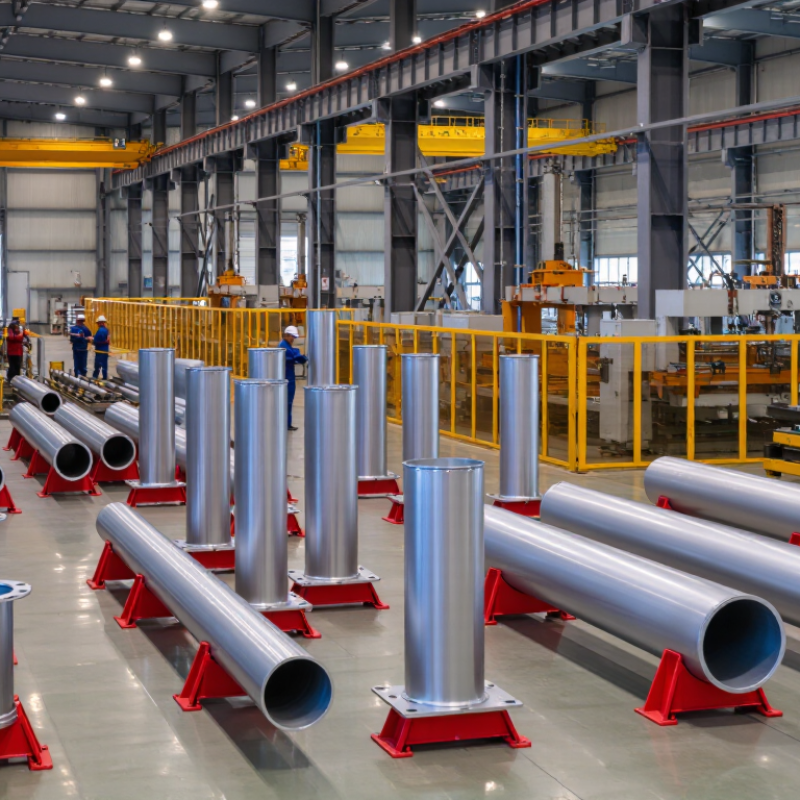
China Top 10 Pipe Support Suppliers What Is Their Lifespan?

What Are Pipe Supports and Why Does Their Lifespan Matter?

Pipe supports are structural components that carry, guide, or restrain pipes. They include shoes, clamps, hangers, anchors, and spring supports. Each type controls movement while keeping the pipe aligned and safely connected to equipment.

Their lifespan matters because support failure can create serious stress on welds, valves, flanges, and connected machinery. Field inspections often reveal rust around base plates, loose fasteners, and damaged insulation. These small defects can become costly failures. A support may last 15 to 30 years, but the figure depends on load, temperature, vibration, moisture, and material quality. Indoor systems usually age more slowly than outdoor systems near salt air.

Engineers check wall thickness, coating condition, weld quality, and drainage during inspections. They also compare actual pipe movement with the original design. Real sites are less tidy than drawings. Poor installation can shorten service life, even when the steel is strong. The weak point is not always the support; sometimes it is trapped water under insulation or an incorrectly tightened clamp. Reliable suppliers should provide material certificates, load data, installation guidance, and traceable inspection records. Maintenance teams should record corrosion depth and movement, rather than relying only on appearance. A neat calculation is not always enough.

The chart shows indicative service-life ranges for common pipe support materials and configurations used in industrial piping systems. Actual lifespan depends on corrosion exposure, load cycles, temperature, installation quality, inspection, and maintenance. These ranges are engineering estimates rather than supplier warranties.

How to Identify China’s Top 10 Pipe Support Suppliers

How to Identify China’s Top 10 Pipe Support Suppliers

A reliable supplier should explain how its supports perform under weight, vibration, temperature changes, and moisture. Do not judge a factory by catalog images alone. Ask for material certificates, load-test records, dimensional reports, and corrosion-control details. Experienced manufacturers can describe installation problems they have solved, not only repeat product specifications.

Compare at least ten suppliers using the same checklist. Review factory experience, production equipment, welding controls, inspection staff, and traceability systems. Request samples with clear drawings and measured dimensions. Check whether the supplier tests coatings, fasteners, welds, and adjustable parts before shipment. Independent laboratory reports can strengthen confidence, but verify their dates and scope.

Service life is not fixed. A support used indoors may last decades, while one near saltwater may deteriorate much sooner. Ask suppliers to estimate lifespan under your actual load and environment. Their answer should include assumptions, maintenance needs, and replacement risks. Contact recent customers and ask about delivery accuracy, installation fit, and failures after several seasons.

A perfect ranking is unlikely.

Price can mislead. Low-cost steel may create hidden maintenance expenses. Some suppliers communicate well before payment, then become slow during technical changes. That weakness matters. Look for stable engineering contacts, controlled revisions, and written responses to difficult questions. A short factory visit, when practical, can reveal more than polished sales material. Check the shop floor, not only the meeting room.

What Materials and Designs Shape Pipe Support Service Life?

China’s pipe support service life depends more on materials and detailing than on steel thickness alone. The NACE IMPACT study estimated global corrosion costs at US$2.5 trillion annually, equal to about 3.4% of global GDP. That figure explains why unsealed support interfaces deserve attention.

Hot-dip galvanized carbon steel suits many dry, ordinary environments. Stainless steel performs better where moisture, chlorides, or chemical vapors persist. However, mixed metals can create galvanic corrosion. Isolation pads and compatible fasteners reduce that risk. Field inspections often find water trapped beneath clamps, not across open surfaces. Small drainage gaps matter. Very much.

ISO 12944 classifies coating durability as low, medium, high, and very high. Its high category represents 15 to 25 years before major maintenance under defined exposure conditions. This is not a guaranteed support lifespan. Design also controls fatigue, vibration, thermal movement, and load concentration. Sliding supports need low-friction surfaces that remain stable after repeated temperature cycles. Anchors require accurate load paths and accessible inspection points. A rigid support may look stronger, yet it can transfer damaging stress into the pipe. Poor alignment remains a common weakness. Engineers should combine corrosion allowance, coating inspection, drainage, and scheduled torque checks. The numbers help, but site conditions can make them optimistic.

China Top 10 Pipe Support Suppliers What Is Their Lifespan? - What Materials and Designs Shape Pipe Support Service Life?

Indicative service-life ranges for commonly supplied pipe-support systems in China. Actual life depends on load, temperature, corrosion category, installation quality, inspection, and maintenance.
No. Support System Type Typical Material / Finish Typical Service Life Main Design Features Suitable Environment Primary Life-Limiting Factors
1 Hot-Dip Galvanized Pipe Clamp Carbon steel with zinc coating, typically applied after fabrication 15–30 years U-bolt or two-piece clamp; simple load transfer; replaceable fasteners Indoor plants and ordinary outdoor industrial areas Zinc depletion, cut-edge corrosion, stagnant water, chloride exposure
2 Hot-Dip Galvanized Trapeze Support Galvanized carbon-steel channels, threaded rods, nuts, and brackets 20–35 years Adjustable cross-member; supports several pipes; easy alignment and expansion clearance Mechanical rooms, utility corridors, warehouses, and general industrial service Overloading, poor drainage, damaged coating, loose connections
3 Painted Carbon-Steel Pipe Shoe Welded carbon steel with primer and protective paint system 10–25 years Raises the pipe from the structure; distributes bearing load; may include wear plates Dry indoor areas and controlled industrial environments Paint breakdown, under-film corrosion, water retention, sliding wear
4 Stainless-Steel 304 Support AISI 304 stainless steel; passivated or mechanically finished 25–40 years High corrosion resistance; smooth surfaces; suitable for hygienic installations Food, pharmaceutical, water-treatment, and moderately corrosive facilities Chloride pitting, contamination by carbon steel, crevice corrosion
5 Stainless-Steel 316 Support AISI 316 or 316L stainless steel with molybdenum-enhanced corrosion resistance 30–50 years Robust clamp and bracket design; improved resistance to chloride-containing atmospheres Coastal facilities, chemical plants, marine service, and wastewater treatment Severe chloride concentration, galvanic contact, weld contamination
6 Fiberglass-Reinforced Plastic Support FRP profiles, molded brackets, or pultruded structural sections 20–40 years Lightweight, electrically non-conductive, and resistant to many chemicals Corrosive chemical areas, water treatment, and electrically sensitive locations UV exposure, elevated temperature, resin compatibility, impact damage
7 Spring Hanger and Variable-Spring Support Painted or coated carbon-steel housing with alloy-steel spring components 15–30 years Accommodates vertical thermal movement; calibrated load range; adjustable hardware Hot process piping, steam systems, and thermally cycling pipelines Spring fatigue, corrosion, incorrect cold-load setting, excessive travel
8 PTFE-Lined Sliding Support Carbon or stainless steel with PTFE sliding pads or wear strips 15–30 years Low-friction movement; limits axial restraint; accommodates thermal expansion Hot piping, long pipe runs, and systems with frequent thermal movement Temperature beyond material rating, dirt ingress, excessive pressure, pad wear
9 Seismic Pipe-Bracing Assembly Galvanized or painted steel brace, channel, clamps, and structural anchors 20–35 years Lateral and longitudinal restraint; engineered anchor and brace-angle configuration High-seismic regions and critical utility, fire-protection, and process piping Anchor failure, corrosion, improper brace spacing, cyclic fatigue, impact
10 Insulated Pipe Support with Thermal Barrier Steel support with high-density insulation insert, moisture barrier, and protective jacket 20–40 years Prevents insulation compression; reduces heat transfer and condensation at support points Chilled water, refrigeration, cryogenic, and high-temperature insulated pipelines Moisture ingress, insulation crushing, jacket damage, thermal cycling
Service-life basis: The ranges are indicative engineering estimates for properly selected, installed, and maintained supports. Design verification should consider operating temperature, sustained and occasional loads, pipe movement, corrosion category, seismic requirements, insulation details, and applicable project standards.

How Long Do Products from the Top 10 Suppliers Last?

Products from China’s top 10 pipe support suppliers usually last 15 to 30 years in ordinary industrial service. The actual lifespan depends on steel grade, coating thickness, vibration, moisture, and installation quality. ISO 12944-1:2017 classifies protective coating durability as low, medium, high, or very high. Its highest category exceeds 25 years, but this is not a warranty. It describes the first major maintenance interval.

Hot-dip galvanized supports can perform for 30 to 70 years in many outdoor settings. Service-life tables published by the American Galvanizers Association show that thicker zinc coatings generally provide longer protection.

Stainless steel supports may exceed 40 years in clean environments, but chloride exposure can shorten that period sharply. Small details matter. Drainage matters.

In real projects, the weakest point is often not the support itself. Threaded rods, weld zones, anchors, and damaged coating fail earlier. The NACE IMPACT study estimated global corrosion costs at 3.4% of world GDP, showing why inspection cannot be treated as paperwork.

Annual checks should examine rust spots, bolt loosening, pipe movement, and coating cuts. A clean factory floor can hide condensation above the ceiling. Lifespan estimates also remain imperfect because suppliers rarely publish identical test conditions. Compare load ratings, coating standards, test reports, and replacement records before choosing among the top 10 suppliers.

How to Extend and Evaluate Pipe Support Lifespan in Practice

Pipe support lifespan depends on load, temperature, vibration, drainage, and corrosion control. A support under a dry indoor line may last decades. Outdoor supports near saltwater can deteriorate much sooner.

ISO 12944-1 classifies protective coating durability as low, medium, high, or very high, with high durability covering 15–25 years.

This describes coating performance, not the complete support life.

Inspectors should examine welds, clamps, anchor bolts, sliding plates, and contact points during shutdowns. Look beneath insulation. Hidden moisture often causes the worst damage. Measure section loss with ultrasonic thickness testing when corrosion is visible.

API 570 supports risk-based inspection and remaining-life calculations for piping systems, but supports still require engineering judgment. The AMPP IMPACT study estimated global corrosion costs at about 3.4% of world GDP. Prevention is therefore cheaper than repeated replacement.

Extend service life by improving drainage, sealing water traps, repairing damaged coatings, and separating dissimilar metals. Confirm that thermal movement remains free after maintenance. A support that looks strong may quietly restrict expansion.

Coating repairs should follow surface preparation and environmental limits stated by the coating manufacturer. Recheck high-risk supports after severe weather or vibration events.

A ten-year lifespan estimate can be wrong. Real inspection records should challenge it.

FAQS

What is a pipe support?

A pipe support carries, guides, or restrains piping. Common types include shoes, clamps, hangers, anchors, and spring supports. Each type manages movement and keeps pipes aligned.

Why does pipe support lifespan matter?

A failed support can stress welds, valves, flanges, and connected machinery. Small defects may become expensive failures. Rust matters.

How long do pipe supports usually last?

Many supports last 15 to 30 years in ordinary industrial service. Actual life depends on load, temperature, vibration, moisture, material quality, and installation.

Which conditions shorten service life?

Salt air, trapped water, heavy vibration, damaged coatings, and poor drainage can accelerate deterioration. Outdoor systems usually age faster than indoor systems.

What materials can improve durability?

Hot-dip galvanized supports may last decades in suitable outdoor conditions. Stainless steel can exceed 40 years in clean environments. Chlorides can reduce that life sharply.

What should buyers request from suppliers?

Request material certificates, load data, dimensional reports, test records, and installation guidance. Traceable inspection records are useful. Catalog pictures are not enough.

How can companies compare suppliers fairly?

Use the same checklist for every supplier. Review factory experience, welding controls, inspection staff, equipment, and traceability. Request samples with measured dimensions.

What should routine inspections examine?

Inspect rust around base plates, loose fasteners, damaged insulation, coating cuts, welds, anchors, and pipe movement. Record corrosion depth instead of judging appearance alone.

Does a low price indicate good value?

Not always. Low-cost steel may create hidden maintenance expenses. A supplier may communicate well initially, then respond slowly during technical changes.

Can lifespan estimates be completely reliable?

No estimate is perfect. Actual sites differ from drawings, and test conditions may not match field conditions. Review assumptions, maintenance needs, and replacement risks carefully.

Conclusion

Pipe supports are essential components in industrial piping systems because they carry loads, control movement, reduce vibration, and help maintain safe pipe alignment. Their service life directly affects system reliability, maintenance costs, and operational safety. This article explains how to identify leading pipe support suppliers in China by assessing manufacturing capability, material quality, design expertise, testing procedures, project experience, and customer service. It also examines how steel grades, coatings, insulation, corrosion resistance, load capacity, and structural design influence durability. A key question is: what is the lifespan of pipe supports? In practice, high-quality supports may serve for decades when correctly designed, installed, and maintained, although actual performance depends on environmental exposure, operating temperature, loading conditions, and inspection standards. The article further discusses practical methods for extending service life, including corrosion control, periodic inspections, fastener checks, alignment reviews, and timely replacement of damaged parts.

Isabella

Isabella

Isabella is a dedicated marketing professional with a sharp focus on driving brand growth and engagement through strategic content creation. With an extensive background in digital marketing, she combines her passion for storytelling with her keen understanding of industry trends to deliver......