When considering the essential infrastructure of industrial systems, understanding what materials are used for pipe supports is crucial. Pipe supports play a significant role in maintaining system integrity. According to industry reports by the American Society of Mechanical Engineers (ASME), approximately 30% of piping failures are due to improper support systems. This underscores the need for careful material selection.
Common materials for pipe supports include steel, plastic, and concrete. Steel offers strength and durability, often recommended for heavy-duty applications. However, it can rust if not coated properly. On the other hand, plastic supports are lightweight and corrosion-resistant, ideal for less demanding environments. In some cases, concrete supports are used for their stability but are less flexible when adjustments are needed.
Selecting the right material is not just about performance; it impacts the overall cost and long-term maintenance of systems. A 2022 market analysis highlights that around 40% of facility maintenance budgets are allocated to piping systems. Therefore, an informed choice on pipe support materials becomes vital, impacting both operational efficiency and safety.
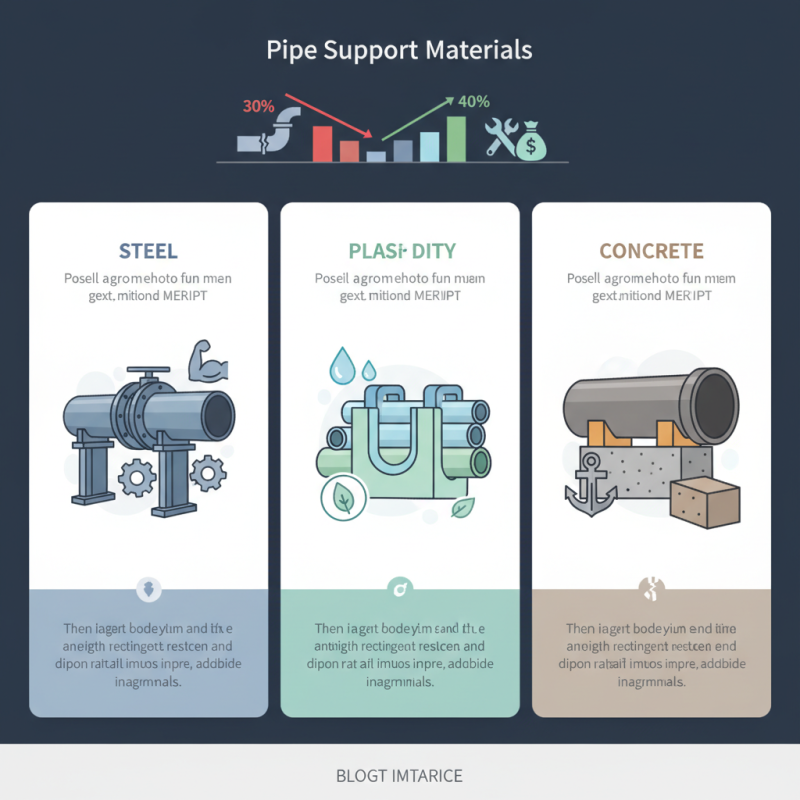
Overview of Pipe Support Materials and Their Applications
When selecting materials for pipe supports, various options shine in different applications. Common materials include
steel,
plastic, and
concrete.
Steel is strong and durable, making it ideal for heavy-duty use. However,
it can be prone to corrosion, requiring protective coatings.
Plastic offers corrosion resistance and lightweight properties, making it
suitable for chemical applications, yet it may lack strength under heavy loads.
Concrete is another popular
choice, particularly for larger installations. It provides excellent compressive strength but can be cumbersome
to install and adjust. Selecting the right material depends on the specific conditions of each project.
Tips: Always assess the environmental
conditions where the supports will be used. For example, areas with high humidity might favor
plastic over
steel. Regular maintenance checks are crucial, especially
for steel supports, to prevent corrosion issues. Evaluating
these factors ensures long-lasting and effective pipe support systems.
Common Materials Used in Pipe Supports: Features and Benefits
When it comes to pipe supports, the choice of material plays a critical role in performance and durability. Commonly used materials include steel, plastic, and rubber. Steel supports are favored for their strength and load-bearing capacity. According to the National Association of Corrosion Engineers, steel can accommodate various environmental factors, making it a reliable choice in many industries. However, it is susceptible to corrosion if not adequately treated.
Plastic supports, particularly those made from PVC, offer a lightweight alternative. They resist corrosion and are often used in chemical processing. A study by the American Society of Mechanical Engineers reveals that plastic supports can last significantly longer in corrosive environments than their metal counterparts. Still, they might not handle heavy loads as effectively, which is a consideration in their application.
Rubber-based supports are another common choice, particularly where vibration and noise reduction are necessary. Their elastic properties absorb shocks and provide stability. However, rubber can degrade over time with exposure to UV light and extreme temperatures. Not everyone realizes that these drawbacks can lead to premature failures. Thus, when selecting materials, a precise understanding of the application's specific conditions is essential.
Best Materials for Pipe Supports
This chart illustrates the durability of various materials used for pipe supports. Carbon steel and stainless steel offer the highest durability, making them ideal for long-term applications, while plastic, aluminum, and wood have shorter lifespans.
Factors to Consider When Choosing Pipe Support Materials
When choosing pipe support materials, several factors come into play. The type of material can significantly impact durability, cost, and installation. According to a report by the American Institute of Steel Construction (AISC), steel supports tend to offer high strength and initial cost efficiency. However, corrosion resistance is a concern in certain environments. For harsh conditions, materials like fiberglass or plastic may be preferred. These options often provide longevity but can come with a higher upfront cost.
Another crucial factor is the load capacity and the environment in which the supports will be placed. A study from the Construction Industry Institute (CII) indicated that improper support selection could lead to system failures. It's essential to match the support material with the mechanical properties required for the specific application. Temperature extremes and chemical exposure must also be considered. Some materials may not perform well under high temperatures or corrosive substances, leading to risks and increased maintenance costs.
Beyond material properties, installation ease also plays a role in the decision-making process. Some materials require specific tools and training, which can complicate the installation. Data suggests that complications during installation can increase project costs by up to 20%. Therefore, understanding the requirements of each material is key to a successful project.
Comparative Analysis of Metal vs. Non-Metal Pipe Supports
When selecting pipe supports, one must consider metal and non-metal options. Metal supports, often made from steel or aluminum, are known for their strength and durability. Reports indicate that they can withstand high temperatures and heavy loads. However, they are vulnerable to corrosion in certain environments. For instance, a study by the American Society of Mechanical Engineers noted that metal supports can lose up to 20% of their strength after prolonged exposure to harsh chemicals.
On the other hand, non-metal supports, such as those made from plastics or composites, provide a lightweight and corrosion-resistant alternative. They are ideal for environments where moisture is prevalent. According to industry research, non-metal supports can be as effective as metal ones, particularly in specific applications. However, they may not support as much weight as metals, which is a critical consideration for heavy piping systems.
Tips: Always assess the environmental conditions before choosing a pipe support type. Conduct regular inspections, especially for metal supports in corrosive environments. Also, be mindful of the load requirements to ensure safe and efficient operation.
Best Materials for Pipe Supports You Need to Know
| Material Type |
Weight (lb/ft) |
Temperature Resistance (°F) |
Corrosion Resistance |
Cost ($/ft) |
| Steel |
3.5 |
600 |
Moderate |
10 |
| Aluminum |
2.5 |
400 |
High |
15 |
| Stainless Steel |
4.0 |
800 |
Very High |
25 |
| Plastic (PVC) |
1.0 |
140 |
Low |
2 |
| Fiberglass |
1.5 |
250 |
Moderate |
5 |
Environmental Considerations in Selecting Pipe Support Materials
When selecting materials for pipe supports, environmental considerations play a critical role. Many materials, such as metals or plastics, have varying levels of impact on the environment. For instance, certain metals can corrode over time, releasing harmful substances into the ecosystem. Considering biodegradable options is vital. It promotes sustainability and reduces the carbon footprint.
The choice of material also affects energy consumption. Lightweight materials can reduce the overall weight of a pipeline system, making transport easier and less energy-intensive. However, lighter does not always mean stronger. It is crucial to find a balance between durability and weight. Some options may seem appealing at first glance but may require frequent replacements, leading to increased waste.
Our responsibility extends beyond the immediate benefits of materials. We need to think long-term. Choosing recyclable materials can minimize waste and lower the impact on landfills. Furthermore, assessing the entire lifecycle of pipe support materials offers valuable insights. Understanding how the material reacts under different environmental conditions helps in making informed choices. Ultimately, it's essential to prioritize eco-friendly strategies in every decision related to pipe support materials.
FAQS
: Common materials include steel, plastic, and concrete. Each has unique properties and applications.
Steel is strong and durable, ideal for heavy loads, but prone to corrosion without protective coatings.
Plastic is lightweight and corrosion-resistant, suitable for chemical applications, though it may struggle with heavy loads.
Concrete offers great compressive strength but is cumbersome for installation and adjustment in many applications.
Areas with high humidity may benefit from plastic supports rather than steel to prevent corrosion.
Yes, rubber supports absorb shocks and reduce noise, but they can degrade with UV exposure and extreme temperatures.
Some materials might release harmful substances, so biodegradable and recyclable options are crucial for sustainability.
Steel supports need maintenance checks to prevent corrosion issues, ensuring longevity and performance.
Lighter materials may not always provide adequate strength, leading to potential failures in heavy-load situations.
Assessing the entire lifecycle of materials helps reduce waste and minimize environmental impact.
Conclusion
This article provides a comprehensive overview of the various materials used for pipe supports, essential for ensuring the stability and longevity of piping systems. It explores common materials, highlighting their features and benefits, such as durability, corrosion resistance, and cost-effectiveness. The discussion includes a comparative analysis of metal versus non-metal pipe supports, detailing their applications based on specific environmental considerations and load requirements.
When deciding what materials are used for pipe supports, important factors to consider include the environment in which they will be installed, the weight and type of pipes being supported, and the potential for thermal expansion. Overall, understanding these elements can guide professionals in selecting the most suitable materials for effective pipe support solutions.

 Ampy Pipe